Digital Out-of-Home Advertising Tools That Actually Drive Results
Digital out of home (DOOH) advertising has transformed traditional billboards and static signage into dynamic, data-driven marketing channels that reach consumers at critical decision-making moments. Unlike conventional outdoor advertising, DOOH leverages digital screens in high-traffic locations—from shopping malls and transit hubs to office buildings and roadside displays—delivering targeted messages that can be updated in real-time based on audience behavior, weather conditions, or time of day.
The technology powering DOOH campaigns relies on specialized platforms and tools that streamline everything from content creation to campaign measurement. Programmatic DOOH platforms automate the media buying process, allowing you to bid on and secure ad placements across multiple networks through a single interface. Content management systems enable you to design, schedule, and deploy creative assets to thousands of screens simultaneously, while analytics dashboards provide real-time performance data including impressions, engagement rates, and foot traffic attribution.
For businesses exploring DOOH, understanding the essential tools makes the difference between scattered efforts and cohesive campaigns that drive measurable results. Demand-side platforms (DSPs) connect you to inventory across multiple DOOH networks, location intelligence tools help identify optimal screen placements based on your target demographic, and attribution software links offline advertising exposure to online actions and in-store visits.
This guide breaks down the critical tools and extensions you need to launch, manage, and optimize DOOH campaigns effectively, regardless of your company size or marketing budget.
What Digital Out-of-Home Advertising Really Means for Your Business
Digital out-of-home advertising represents the evolution of traditional billboards and static displays into dynamic, data-driven marketing channels. In practical terms, DOOH refers to digital screens in public spaces that display advertising content—from roadside billboards and transit shelters to shopping mall displays and airport terminals.
The fundamental difference between traditional OOH and DOOH lies in flexibility and intelligence. While traditional billboards require manual installation and remain static for weeks or months, DOOH campaigns can be updated instantly from your computer. You can change messaging based on time of day, weather conditions, or current events without physically touching the display.
This digital transformation brings three critical advantages to your marketing efforts. First, real-time updates allow you to respond immediately to market conditions. Launch a rainy day promotion when storms hit, or adjust messaging during breaking news that affects your industry. Second, audience targeting capabilities let you display specific content based on demographics, location data, and traffic patterns. Your breakfast promotion appears during morning commutes, while evening entertainment offers run after work hours. Third, DOOH provides measurable ROI through impression tracking, engagement metrics, and attribution data that traditional billboards simply cannot deliver.
The power of DOOH becomes clear when you integrate it into your broader digital marketing strategy. Your DOOH displays can reinforce social media campaigns, complement search advertising, and create cohesive brand experiences across channels. The same creative assets, messaging, and data insights that drive your online campaigns can now extend into physical spaces where your customers live, work, and shop.
For business owners and marketing professionals, DOOH represents an opportunity to bring the precision and agility of digital marketing to public advertising spaces, creating campaigns that work harder and deliver clearer results than ever before.
Essential DOOH Advertising Platforms and Tools
Programmatic DOOH Platforms
Programmatic buying platforms have revolutionized how businesses purchase digital billboard space, replacing manual negotiations with automated, data-driven transactions. These platforms function similarly to online advertising exchanges, allowing you to buy DOOH inventory in real-time through intuitive dashboards rather than coordinating directly with individual billboard owners.
The efficiency gains are substantial. Instead of spending weeks negotiating contracts for multiple locations, you can launch campaigns across dozens of screens in hours. The platforms aggregate inventory from various DOOH networks, giving you access to thousands of digital billboards through a single interface. This consolidation saves time and simplifies campaign management significantly.
What sets programmatic DOOH apart is its advanced targeting capabilities. You can trigger ads based on specific conditions like weather patterns, traffic levels, time of day, or local events. For example, a coffee shop chain could display breakfast promotions during morning rush hour, then switch to lunch specials by noon. Some platforms integrate audience data, allowing you to reach demographics similar to your customer base even in physical spaces.
Transparency is another key advantage. You’ll see exactly which screens your ads appear on, when they run, and how many impressions you receive. Real-time reporting lets you adjust campaigns on the fly, optimizing performance without waiting for end-of-month reports. This level of control and flexibility makes programmatic DOOH accessible even for businesses with modest advertising budgets who want measurable results from their outdoor campaigns.
Creative Management Systems
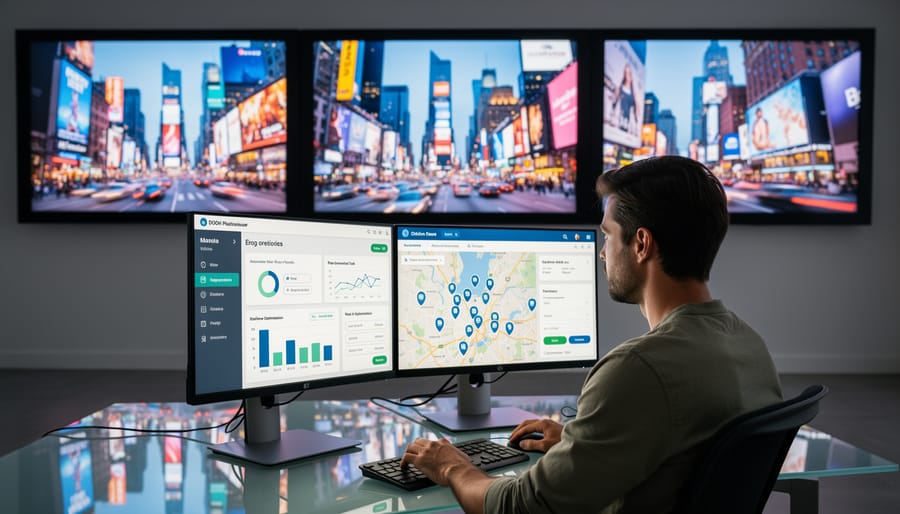
Modern creative management systems have transformed how businesses handle DOOH advertising by eliminating the need for technical expertise. These platforms provide intuitive drag-and-drop interfaces that let marketing teams design and deploy professional campaigns without relying on graphic designers or IT departments.
The standout feature of these systems is their ability to optimize DOOH creative content automatically based on real-time data. You can connect your campaigns to weather feeds, inventory levels, or social media trends, allowing your advertisements to adjust messaging instantly. For example, a restaurant chain can automatically switch from lunch specials to dinner promotions based on time of day.
Most platforms include built-in template libraries specifically designed for various screen sizes and formats, ensuring your content displays correctly across different digital billboards. Version control features let multiple team members collaborate seamlessly while maintaining brand consistency.
Cloud-based creative management systems also enable instant updates across your entire network of displays. When you need to change pricing, promote flash sales, or respond to market conditions, you can push updates within minutes rather than waiting days for traditional production cycles. This agility gives small and medium-sized businesses the same capabilities previously available only to large corporations with dedicated creative teams.
Analytics and Measurement Tools
Modern DOOH campaigns require robust analytics to justify ad spend and optimize performance. Unlike traditional billboards, digital platforms offer measurable data that helps you understand exactly how your investment performs.
Leading measurement platforms like Broadsign, Vistar Media, and Place Exchange provide comprehensive dashboards to track campaign performance across multiple screens and locations. These tools automatically collect impression data, showing how many people viewed your ads based on foot traffic patterns and screen locations.
Attribution technology has advanced significantly, enabling businesses to connect DOOH exposure to actual customer actions. Mobile location data helps track whether people who saw your ad visited your store or website afterward. Platforms like Quividi and AdMobilize use anonymous audience detection to provide demographic insights without compromising privacy.
Key metrics these tools measure include:
Impressions and reach across different times and locations
Dwell time showing how long audiences engage with your content
Conversion rates linking ad exposure to store visits or online actions
Audience demographics helping refine targeting strategies
Most platforms automate reporting, sending regular performance updates directly to your team. This eliminates manual data compilation and keeps stakeholders informed without constant communication requests.
For small to medium businesses, many networks include basic analytics in their service packages. As you scale, standalone measurement tools integrate with your existing marketing analytics, providing a unified view of how DOOH contributes to your overall marketing mix.
Integration Extensions for Your Existing Marketing Stack
Modern DOOH platforms integrate seamlessly with your existing marketing tools to maximize campaign effectiveness. Most leading DOOH solutions connect directly with popular CRM systems like Salesforce and HubSpot, allowing you to trigger outdoor advertising based on customer data and behaviors. This means you can coordinate your digital billboard messages with email campaigns, social media posts, and website content for consistent brand messaging across all touchpoints.
These integrations also sync with social media platforms, enabling you to display live social feeds, user-generated content, or amplify trending campaigns on outdoor screens. Marketing automation software connections allow you to schedule DOOH content alongside your other channels, track attribution, and measure how outdoor exposure influences online conversions. The result is a unified marketing ecosystem where your DOOH campaigns work in tandem with digital efforts rather than operating in isolation, giving you better insights into customer journeys and improved ROI measurement.
Automated DOOH Campaign Management: Work Smarter, Not Harder
Managing digital out-of-home campaigns manually can quickly become overwhelming. Between monitoring performance metrics, adjusting bids, and updating creative assets, you’re left with little time for strategic planning or client relationships. Automation changes this equation entirely.
Modern DOOH platforms offer sophisticated automation features that handle repetitive tasks while you focus on high-value activities. Automated bidding systems continuously optimize your ad placements based on performance data, adjusting bids in real-time to maximize your budget efficiency. Instead of manually tweaking bids throughout the day, the system does it for you, ensuring you’re always competitive without overspending.
The real power of automation shows up in dynamic content updates. Your campaigns can automatically respond to external triggers like weather conditions, traffic patterns, or local events. A coffee shop can display hot beverage ads when temperatures drop below a certain threshold. A retail store can promote rain gear when forecasts predict storms. These contextual adjustments happen without your intervention, making your campaigns more relevant and effective.
Scheduled campaign adjustments let you plan ahead without constant monitoring. Set parameters for different times of day, days of week, or seasonal periods, and the platform executes your strategy automatically. Launch morning commute campaigns at 7 AM, switch to lunch promotions at noon, and activate evening entertainment ads by 5 PM—all without manual input.
This automation infrastructure frees up substantial time in your workday. Instead of being buried in campaign dashboards making minor adjustments, you can focus on developing creative strategies, analyzing broader market trends, and strengthening client relationships. You become a strategic advisor rather than a tactical operator.
For small to medium-sized businesses and startups, this efficiency gain is particularly valuable. You can run sophisticated campaigns without hiring additional staff or sacrificing quality. The automation handles the operational complexity while you concentrate on growing your business and delivering results that matter to your clients. When technology manages the mechanics, you’re free to work on what actually moves the needle.
Making DOOH Work for Small to Medium-Sized Businesses
DOOH campaigns are more accessible than most small to medium-sized businesses realize. While premium billboard locations in major cities can cost thousands per week, modern DOOH platforms offer flexible options that fit smaller budgets, often starting at a few hundred dollars for targeted campaigns.
The key is starting strategically. Begin with a limited geographic area where your target customers are most concentrated. Many DOOH platforms now use programmatic buying, which allows you to purchase specific time slots or audience segments rather than committing to full-day placements. This means you can run ads during peak hours when your ideal customers are present, significantly reducing costs while maintaining impact.
Test your campaigns in phases. Start with a two-week trial in one or two high-potential locations. Focus on a single, clear message with strong visual appeal and a simple call to action. Track response using unique promo codes, dedicated landing pages, or QR codes to measure direct attribution. This data becomes invaluable for justifying expanded spending and refining your approach.
Automation tools have democratized DOOH campaign management. Platforms like Broadsign, Hivestack, and Vistar Media allow you to set up, monitor, and adjust campaigns without hiring specialized agencies. Many offer self-service dashboards that provide real-time performance metrics, enabling quick pivots if something isn’t working.
When evaluating costs, consider the cost per thousand impressions compared to digital advertising. DOOH often delivers competitive rates while offering the added benefit of physical presence and higher engagement rates in specific locations.
Once you identify winning combinations of location, timing, and creative, scale gradually. Add one or two new locations at a time, maintaining the same measurement discipline. This controlled growth protects your budget while building a proven DOOH strategy that delivers measurable returns. Remember, successful DOOH campaigns for SMBs prioritize precision over reach, making every dollar count through smart targeting and continuous optimization.
Common DOOH Mistakes and How to Avoid Them
Even with the best tools available, DOOH campaigns can fall short if you make these common mistakes. Understanding these pitfalls helps you maximize your investment and campaign effectiveness.
Poor creative design ranks as the top mistake. Many advertisers repurpose social media or print ads for DOOH screens without considering viewing distance, screen brightness, or the brief attention span of passersby. Your creative needs bold colors, large text, and a single clear message. Solution: Design specifically for outdoor viewing with high contrast, minimal text (seven words or fewer), and visuals that communicate instantly. Test your creative at various distances before launching.
Inadequate audience targeting wastes budget quickly. Placing ads without considering foot traffic patterns, demographics, or timing leads to poor results. Solution: Use DOOH platforms with built-in audience analytics and location intelligence. Schedule your ads during peak times when your target audience is most present. A lunch special should run during midday hours, not at midnight.
Failing to track results leaves you guessing about campaign performance. Without measurement, you cannot prove ROI or improve future campaigns. Solution: Implement tracking from day one using automated reporting tools that monitor impressions, engagement rates, and attribution metrics. Most modern DOOH platforms offer real-time dashboards that simplify this process.
Not optimizing campaigns means missing opportunities to improve performance. Markets change, and static campaigns become stale. Solution: Review performance data weekly and adjust creative, timing, or locations based on results. Automated campaign management tools make these adjustments straightforward, allowing you to respond quickly to what the data reveals.
Digital out of home media success hinges on selecting the right tools and pairing them with a clear, goal-driven strategy. The technology landscape offers robust platforms for campaign management, creative automation, audience targeting, and performance measurement. However, tools alone don’t guarantee results. The most effective DOOH campaigns emerge when businesses automate repetitive processes, maintain consistent communication with stakeholders, and continuously optimize based on real-time data insights. Whether you’re a startup testing your first campaign or an established business scaling nationwide, focus on platforms that integrate seamlessly with your existing marketing stack and provide transparent analytics. Start by evaluating your current advertising objectives and budget constraints. Then, identify which DOOH tools address your specific needs, whether that’s dynamic content delivery, location-based targeting, or comprehensive reporting. Take action today by auditing one campaign opportunity where DOOH could enhance your brand visibility and customer engagement.
Leave a Reply