What Is AI Driven Automation (and How Does It Work in Business Process Reengineering)?
AI-driven automation is the use of artificial intelligence to run tasks and workflows that once needed a person to decide, review, or respond.

AI-driven automation is the use of artificial intelligence to run tasks and workflows that once needed a person to decide, review, or respond.

Google Analytics transforms UX research by revealing exactly how users navigate your site, where they struggle, and which design changes drive measurable behavior shifts. Rather than relying solely on what users say in interviews or surveys, GA shows what they actually do through pageviews, click patterns, session recordings, and conversion funnels. The systematic approach takes about 30 minutes to configure properly and delivers continuous behavioral insights without additional research costs.
Most business owners already have GA…

Melanotan II is a synthetic analog of alpha-melanocyte stimulating hormone (α-MSH), comprising seven amino acids in a cyclic heptapeptide structure with the sequence Ac-Nle-cyclo[Asp-His-D-Phe-Arg-Trp-Lys]-NH2. This molecular configuration allows the peptide to bind melanocortin receptors with significantly higher potency than the natural hormone, primarily targeting MC1R and MC4R pathways.
For marketing professionals in regulated peptide industries, understanding these structural properties matters because they form the foundation of compliant product communications. The…
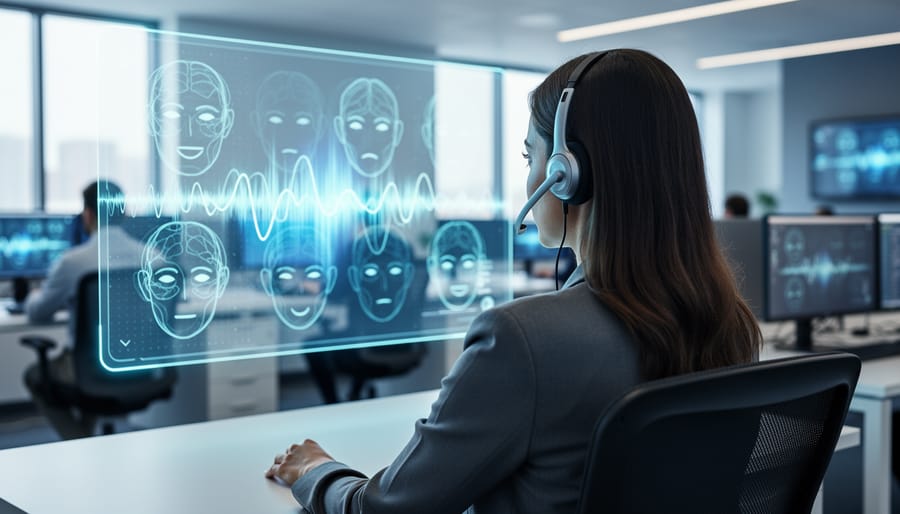
No, AI is not capable of genuine emotions. What we call “emotional AI” or “emotion recognition technology” refers to systems that detect, interpret, and respond to human emotional signals through facial expressions, voice tone, and text analysis, but the technology itself experiences nothing.
This distinction matters because businesses are now deploying emotion recognition systems across customer service platforms, chatbots, and automated communication tools. Understanding what these systems actually do versus what they appear to do helps you set realistic expectations and implement them effectively.
…

Video sustainability is the practice of reducing the environmental impact and resource consumption of digital video throughout its entire lifecycle, from production and storage to distribution and playback. As businesses scale their video marketing efforts in 2026, the hidden costs become harder to ignore: server farms storing thousands of unused video files, bandwidth-heavy assets slowing page loads, and energy-intensive streaming that compounds with every view.
The business case extends beyond environmental responsibility. Sustainable video practices directly improve page performance, reduce hosting costs, and enhance user …
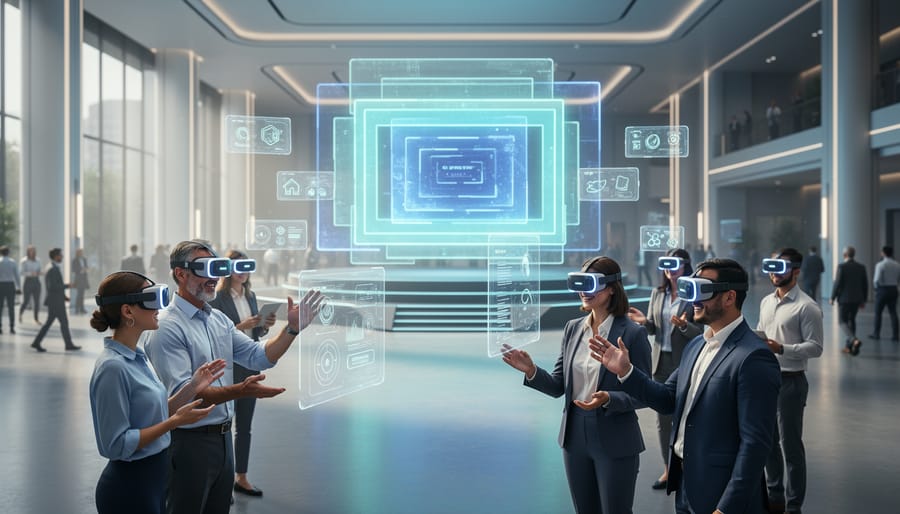
Virtual reality conventions deliver immersive brand experiences and qualified leads through customizable 3D environments accessible from anywhere, combining the networking power of in-person events with the scale and data tracking capabilities of digital marketing. The core method involves building a persistent virtual venue, integrating engagement mechanics like live product demos and breakout sessions, and driving attendance through multichannel promotion.
Marketing professionals adopting VR conventions in 2026 face a …

Netflix personalization works by analyzing your viewing behavior, preferences, and engagement patterns to surface content you’re most likely to watch. The streaming giant uses a combination of collaborative filtering, content-based algorithms, and machine learning to create individualized homepages, thumbnails, and recommendations for each of its 260 million subscribers. You can apply these same techniques to your business by tracking customer behavior, segmenting audiences based on their actions, and delivering targeted content that matches their demonstrated interests.
The reason this matters for your business is simple: …

Organic search metrics are the quantifiable data points that measure how your website performs in unpaid search engine results, tracking everything from visibility and traffic to user behavior and conversion outcomes. These metrics tell you whether your search marketing efforts are working or wasting resources.
Understanding these numbers matters because organic search drives more than half of all website traffic for most businesses, yet many teams track the wrong metrics or ignore critical signals until performance crashes. The difference between monitoring vanity metrics and tracking meaningful data can determine whether you scale…

AI-powered email marketing uses machine learning and automation to personalize, optimize, and send email campaigns based on customer behavior, preferences, and predicted actions, with minimal manual intervention.
For most businesses in 2026, email remains one of the highest-ROI marketing channels. But the traditional approach of crafting a single message, segmenting a list manually, and hitting send no longer cuts it. Customers expect personalized experiences, not batch-and-blast campaigns. AI bridges this gap by analyzing patterns in customer data that would take a human team weeks to uncover, then automatically adjusting subject …

Machine learning digital marketing refers to the application of artificial intelligence algorithms that analyze data, identify patterns, and make automated decisions to optimize marketing campaigns without constant human intervention. These systems learn from historical performance data to predict customer behavior, personalize content, and allocate budget more efficiently than manual methods.
Marketing teams that implement machine learning see measurable improvements in campaign performance because the technology processes volumes of data impossible for humans to analyze in real time. A retail brand running hundreds of ad …