How Key Agreement Protocols Keep Your Customer Data Safe (Without Slowing Down Your Campaigns)

Every time your marketing team collects customer emails, processes payment information, or shares campaign data with partners, you’re creating vulnerabilities that cybercriminals actively exploit. Key agreement protocols solve this problem by establishing secure communication channels between parties without ever transmitting the actual encryption keys across the network—think of it as two people creating a private language while shouting only nonsense to eavesdroppers.
For marketing professionals, these protocols operate silently in the background of your CRM systems, email platforms, and payment processors, ensuring that sensitive customer data remains encrypted during transmission. When you integrate a new marketing automation tool with your existing tech stack, key agreement protocols automatically negotiate encryption standards between systems, protecting information like purchase histories, behavioral data, and personal identifiers without requiring manual configuration.
The business impact is straightforward: implementing security protocols that work prevents data breaches that average $4.45 million per incident and destroy customer trust overnight. Modern marketing operations generate massive data flows between analytics platforms, advertising networks, and customer databases—each connection point represents a potential security gap that proper key agreement protocols automatically seal.
Understanding these protocols doesn’t require technical expertise, but it does demand awareness of where your customer data travels and which automated security measures your marketing tools actually employ. Most importantly, this knowledge empowers you to ask the right questions when evaluating new marketing technologies and ensures your team maintains compliance with data protection regulations while executing campaigns efficiently.
What Is a Key Agreement Protocol?

Why It Matters for Your Marketing Operations
Every day, your marketing tools exchange sensitive customer data across the internet. When your CRM syncs contact information to your email marketing platform, or when customer behavior data flows from your website to analytics tools, key agreement protocols work behind the scenes to protect that information. These security measures ensure that when your social media advertising platform receives audience data, or when your marketing automation system connects with third-party integrations, the data remains encrypted and accessible only to authorized systems.
Without proper key agreement protocols, your customer data becomes vulnerable during these routine transfers. A breach could expose email addresses, purchase history, browsing behavior, and personal preferences that your clients trust you to protect. Modern marketing operations rely on dozens of connected tools, from lead generation forms to payment processors. Each connection represents a potential security gap that key agreement protocols help seal. By ensuring these protocols are active in your marketing stack, you maintain data integrity, comply with privacy regulations, and protect your business reputation while keeping your automated marketing processes running smoothly.
The Real Risks in Digital Marketing Data Exchange
Where Your Marketing Data Is Most Vulnerable
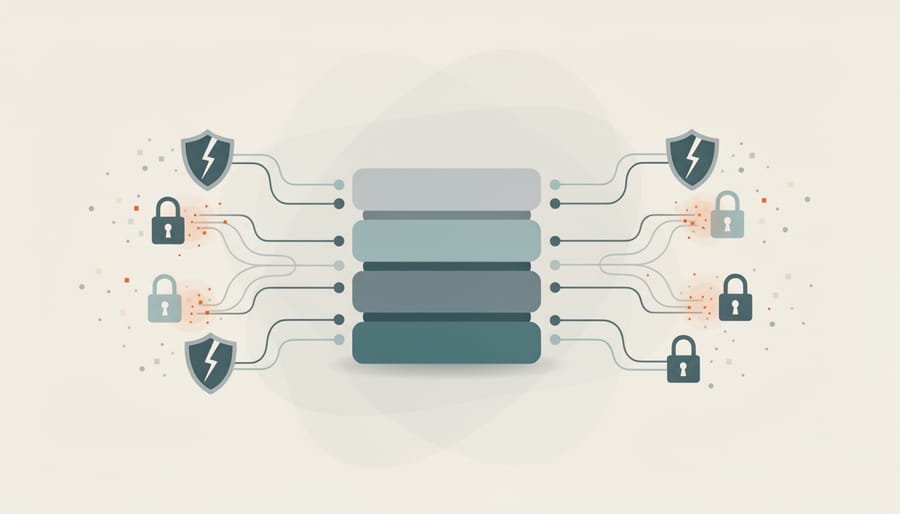
Your marketing data faces exposure at multiple points throughout your operations, often in places you might not immediately consider. Understanding these vulnerabilities is the first step toward implementing proper key agreement protocols.
Third-party integrations represent one of the most significant risk areas. Every time you connect a new tool to your marketing stack—whether it’s a social media scheduler, analytics platform, or email service—you’re creating another potential entry point for data breaches. These integrations often request broad access permissions to function properly, expanding your security perimeter.
API connections deserve particular attention. When different marketing platforms communicate through APIs, they’re transmitting sensitive customer information across networks. Without proper encryption through key agreement protocols, this data travels in formats that could be intercepted by unauthorized parties.
Marketing automation platforms centralize massive amounts of customer data, from contact information to behavioral patterns and purchase history. This concentration of sensitive information makes them attractive targets for cybercriminals. If your platform lacks robust data privacy marketing protocols, you’re putting your entire customer database at risk.
Client reporting systems often get overlooked in security assessments, yet they regularly transmit performance data, customer insights, and campaign results. When you share reports through unsecured channels or grant dashboard access to clients without proper authentication, you’re creating vulnerabilities that could compromise both your data and your clients’ information.
How Key Agreement Protocols Work in Your Marketing Stack
The Three Steps That Happen Behind the Scenes
When your marketing platforms exchange sensitive customer information, key agreement protocols work automatically in the background. Here’s what happens in three straightforward steps:
Step 1: The Initial Handshake
When two systems connect for the first time—like your email marketing platform syncing with your customer database—each system generates its own set of mathematical values. Think of this as each platform creating its own unique puzzle piece. These values are designed to work together without either system needing to reveal its complete security credentials. This happens instantly and requires no action from your team.
Step 2: The Secure Exchange
Both systems share specific calculated values with each other over the connection. Here’s the clever part: even if someone intercepts these shared values, they can’t use them to access your data. It’s similar to two people speaking in code where only they understand the full context. Your marketing automation tools handle this exchange automatically every time they communicate.
Step 3: Creating the Shared Secret Key
Using the exchanged values and their own private information, both systems independently calculate the same encryption key. Neither system ever sends this actual key over the internet—they both arrive at it through calculation. This shared key then encrypts all customer data, transaction details, and communication between your platforms. The entire process completes in milliseconds, ensuring your marketing operations run smoothly while maintaining security.
Implementing Secure Data Exchange Without Adding Complexity
Questions to Ask Your Marketing Technology Vendors
Before committing to any marketing technology platform, protect your business by asking these essential security questions. Start with encryption: “What key agreement protocols do you use to secure data transmission?” Your vendor should clearly explain their encryption methods without deflecting. Ask about compliance certifications: “Are you SOC 2, GDPR, and CCPA compliant?” Request documentation to verify their claims.
Dig deeper into data protection: “How do you handle encryption keys, and who has access to them?” The answer reveals whether they follow proper security practices. Question their approach to zero trust security principles and how often they conduct security audits.
Don’t forget practical concerns: “What happens to our data if we terminate the service?” and “How quickly can you notify us of a security breach?” These questions demonstrate your commitment to protecting customer information while helping you identify vendors who take security seriously versus those who treat it as an afterthought. Remember, vague answers or resistance to these questions are red flags warranting further investigation.
Automated Security Checks That Save Time
Modern key agreement protocols work best when paired with automated systems that handle security checks without requiring constant manual intervention. These solutions continuously monitor your marketing platforms, verify encryption status, and flag potential vulnerabilities before they become problems.
Automated systems can validate that key exchanges occur properly during every customer interaction, from newsletter signups to payment processing. They check certificate validity, monitor for unusual access patterns, and ensure all data transmissions meet your security standards. This automated security monitoring runs 24/7, catching issues your team might miss during busy periods or after hours.
The real advantage is efficiency. Instead of dedicating staff hours to manual security audits, automated checks handle routine verification while alerting you only when action is needed. This approach reduces human error, speeds up response times, and lets your team focus on growing your business rather than constantly watching for security gaps.
For small to medium-sized businesses, automation levels the playing field, providing enterprise-grade security protection without enterprise-level costs or complexity.

Common Mistakes That Put Your Marketing Data at Risk
Even with the best intentions, marketing teams frequently make critical errors that expose customer data to unnecessary risk. One of the most common mistakes is storing API keys and authentication credentials in plain text within marketing automation tools or shared documents. When your team needs to connect your CRM to an email platform or social media management tool, these sensitive keys should never be copied into spreadsheets or chat messages where they can be easily compromised.
Another widespread oversight involves using the same login credentials across multiple marketing platforms. When one account is breached, this practice creates a domino effect that can compromise your entire marketing stack. Instead, implement unique, complex passwords for each platform and consider password management tools that your team can use without slowing down daily operations.
Many businesses also fail to revoke access for former employees or contractors who previously had credentials to marketing systems. This creates an open door for potential data breaches long after someone has left your organization. Establish a clear offboarding process that immediately removes access to all marketing tools and platforms.
Lastly, relying solely on username and password combinations without additional authentication layers leaves your systems vulnerable. Even basic two-factor authentication adds significant protection without creating major workflow disruptions. The key is implementing these security measures through automated systems that work in the background, protecting your data while your team focuses on what they do best: growing your business.
Key agreement protocols aren’t just a technical necessity—they’re the foundation of trustworthy marketing operations in today’s data-driven landscape. When you implement robust encryption and secure data exchange practices, you’re doing more than protecting information. You’re building client confidence, demonstrating your commitment to privacy, and positioning your business as a responsible steward of customer data.
The stakes are clear. Data breaches cost businesses an average of millions in damages, while regulatory penalties for non-compliance continue to increase. More importantly, losing customer trust can damage your reputation in ways that far exceed any immediate financial impact. By prioritizing key agreement protocols in your marketing systems, you’re investing in long-term business sustainability and competitive advantage.
The good news is that modern automated solutions make implementation more accessible than ever. You don’t need an extensive technical team to secure your marketing operations. Many platforms now offer built-in encryption and automated key management, allowing you to focus on strategy while the technology handles the security details.
Take action today by evaluating your current security practices. Review how your marketing platforms handle data encryption, examine your vendor agreements for security commitments, and identify any gaps in your data protection strategy. If you’re using outdated systems or manual processes for sensitive customer information, it’s time to upgrade. The investment you make in secure key agreement protocols today will pay dividends in client confidence, regulatory compliance, and peace of mind tomorrow.
Leave a Reply