How AI Transforms Google Analytics Into Your Most Powerful SEO Weapon

Google Analytics contains a goldmine of SEO data that most businesses barely scratch the surface of—and artificial intelligence now makes it possible to extract insights that would take weeks of manual analysis. Connect your organic search traffic patterns to conversion data by segmenting users who arrived through specific keyword categories, then use AI tools to identify which search terms drive not just visits, but actual revenue. This reveals where to focus your content optimization efforts for maximum ROI.
Set up automated alerts that flag sudden drops in organic traffic to high-value pages, allowing you to address technical SEO issues or algorithm impacts before they significantly hurt your bottom line. AI-powered analytics platforms can now process your Google Analytics data alongside Search Console metrics to pinpoint exactly which pages underperform relative to their ranking positions—a clear signal that your content needs improvement to match user intent.
Transform your bounce rate and engagement metrics into actionable SEO strategies by letting AI identify patterns across hundreds of landing pages simultaneously. These patterns reveal what content structures, word counts, and media elements keep visitors engaged versus what sends them back to search results. Instead of guessing at optimization priorities, you’ll have data-driven recommendations that connect directly to business outcomes.
The combination of Google Analytics historical data and modern AI interpretation capabilities means you can finally answer the question every business owner asks: which SEO efforts actually generate customers, not just traffic?
Why Traditional Google Analytics Falls Short for Modern SEO
The Data Overwhelm Problem
Google Analytics provides hundreds of metrics and dimensions, but this abundance creates a significant challenge: knowing which data actually matters for your SEO strategy. Without clear direction, marketing professionals spend hours exploring reports, jumping between dashboards, and second-guessing their priorities. This analysis paralysis wastes valuable time that could be spent implementing improvements.
The problem intensifies when teams lack the expertise to connect data analytics for marketing outcomes with specific SEO actions. You might notice organic traffic fluctuations, but understanding whether they stem from algorithm updates, seasonal trends, or content performance requires deeper analysis. Traditional manual review methods struggle to identify these patterns quickly or accurately.
Most businesses end up relying on surface-level metrics like total pageviews or bounce rates without understanding the underlying user behavior driving those numbers. This superficial approach misses critical opportunities for optimization and prevents you from making informed decisions about content strategy, technical improvements, or keyword targeting. The result is wasted effort on activities that don’t move the needle for search visibility.

Missing the Revenue-Driving Patterns
Manual analysis of Google Analytics data often reveals surface-level metrics like page views and bounce rates, but typically fails to uncover the deeper correlations that actually drive business growth. When you’re manually reviewing reports, it’s nearly impossible to identify how specific organic search patterns connect to conversion behaviors across multiple customer touchpoints.
For example, you might notice that organic traffic increased by 20% last month, but miss that visitors from long-tail keywords convert at three times the rate of broad search terms. Or you could overlook the pattern that users who land on blog posts and then visit product pages within the same session have a 40% higher lifetime value than direct purchasers.
These revenue-driving insights exist in your data, but they’re buried within thousands of data points that change daily. The human brain simply cannot process the volume of variables simultaneously enough to spot these critical connections consistently. Manual spreadsheet analysis takes hours and typically examines only a handful of dimensions at once, while automated systems can analyze hundreds of variables in seconds, revealing correlations between search behavior, content engagement, and actual business outcomes that would otherwise remain invisible.
What AI-Enhanced Analytics Actually Does for Your SEO
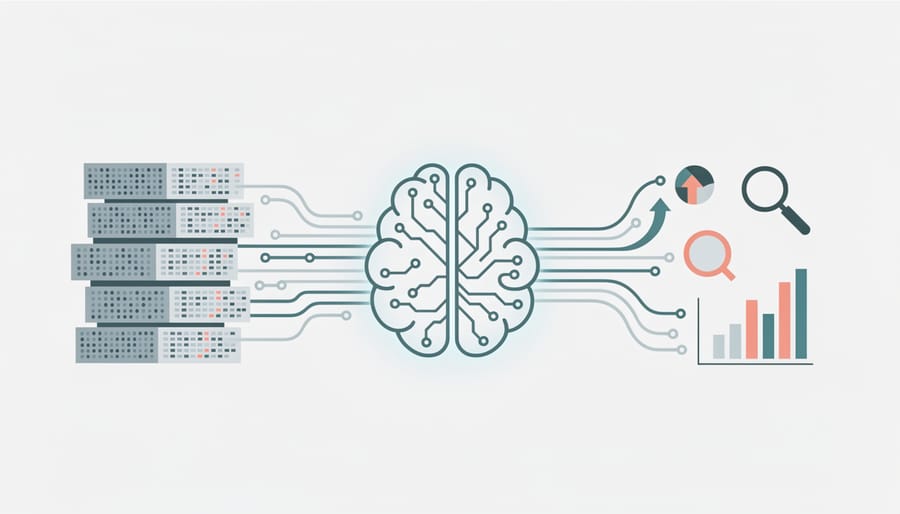
Automated Pattern Recognition That Finds Hidden Opportunities
Modern analytics platforms generate overwhelming amounts of data daily, making it nearly impossible to manually spot every opportunity. This is where AI is revolutionizing SEO by automatically detecting patterns that would otherwise remain invisible.
AI-powered pattern recognition scans your Google Analytics data continuously, identifying trending search queries before they peak. Instead of waiting for monthly reports, automated systems alert you when specific keywords show unusual growth, allowing you to create content while interest is rising. This proactive approach helps you capture traffic opportunities your competitors might miss.
These intelligent systems also analyze content performance patterns across hundreds of variables simultaneously. They identify which page elements, content lengths, and topic combinations drive the best engagement and conversion rates. By recognizing these patterns, AI can recommend specific optimizations that align with proven success factors from your own data.
User behavior signals receive similar treatment. AI tracks navigation paths, bounce patterns, and time-on-page metrics to understand how visitors actually interact with your site. It automatically flags pages where users consistently exit, identifies content gaps based on search behavior, and reveals unexpected connections between different pages that perform well together.
The real advantage lies in automation. While you focus on strategy and client communication, AI continuously monitors your analytics, flagging anomalies and opportunities the moment they emerge. This constant vigilance ensures you never miss critical insights buried in spreadsheets or forgotten in quarterly reviews.
Predictive Insights That Guide Your Strategy
Modern predictive analytics transforms Google Analytics from a rearview mirror into a crystal ball for your SEO strategy. AI algorithms analyze historical patterns in your traffic data to forecast upcoming trends, helping you allocate resources where they’ll generate the greatest return.
Instead of discovering performance drops after they’ve damaged your rankings, AI monitoring flags at-risk pages when early warning signs appear. These systems detect subtle shifts in engagement metrics, bounce rates, and traffic patterns that indicate a page is losing relevance, giving you time to refresh content before search visibility plummets.
The same technology evaluates your content pipeline by comparing proposed topics against historical performance data and current market signals. This means you can confidently invest in content creation knowing which topics have the highest probability of attracting qualified traffic and conversions.
For businesses without dedicated data science teams, automated reporting tools now deliver these insights through simple dashboards. You receive clear recommendations about which pages need attention, which content types to prioritize, and where your next SEO wins are likely to come from, all without decoding complex spreadsheets.
The Most Valuable SEO Metrics AI Can Extract From Google Analytics
Traffic Quality Signals That Actually Matter
Pageviews tell you someone arrived, but not whether they found what they needed. Google Analytics provides deeper traffic quality signals that directly impact your SEO strategy and business outcomes.
Start with engagement depth metrics. Average engagement time and pages per session reveal whether visitors find your content valuable enough to explore further. A blog post with high pageviews but 15-second sessions signals a content-intent mismatch that search engines will eventually penalize. Monitor scroll depth in GA4 events to identify where visitors lose interest.
Conversion potential matters more than volume. Track assisted conversions to understand which organic landing pages contribute to your sales funnel, even if they don’t close deals directly. Set up custom events for meaningful interactions like video watches, calculator uses, or PDF downloads that indicate genuine interest.
User intent matching shows in your landing page performance reports. High bounce rates on specific queries suggest your content doesn’t match what searchers expect. Use GA4’s exploration reports to segment traffic by landing page and user engagement, identifying pages that attract visitors but fail to satisfy their needs.
These signals help you prioritize optimization efforts on pages with genuine business impact rather than chasing vanity metrics.
Content Performance Scoring Automated
AI-powered analytics transform how you evaluate content success by measuring actual SEO impact rather than surface-level metrics. Traditional approaches focus heavily on page views and session duration, but these numbers don’t tell you which content drives conversions, builds authority, or improves search rankings.
Modern AI systems analyze multiple data points simultaneously—time on page, scroll depth, internal link clicks, bounce rates, and conversion paths—to assign each piece of content a comprehensive SEO value score. This automated scoring reveals which pages genuinely contribute to your organic search performance and business goals.
The system identifies high-performing content that deserves more internal linking and promotion, while flagging underperforming pages that need optimization or removal. You’ll see exactly which topics resonate with both search engines and your target audience, eliminating guesswork from your content strategy.
This automated approach saves hours of manual analysis while providing more accurate insights. Instead of drowning in spreadsheets, you receive clear performance rankings that guide your next actions—whether that’s updating existing content, creating similar pieces, or adjusting your keyword focus based on what actually delivers results.
Technical SEO Red Flags Surfaced Instantly
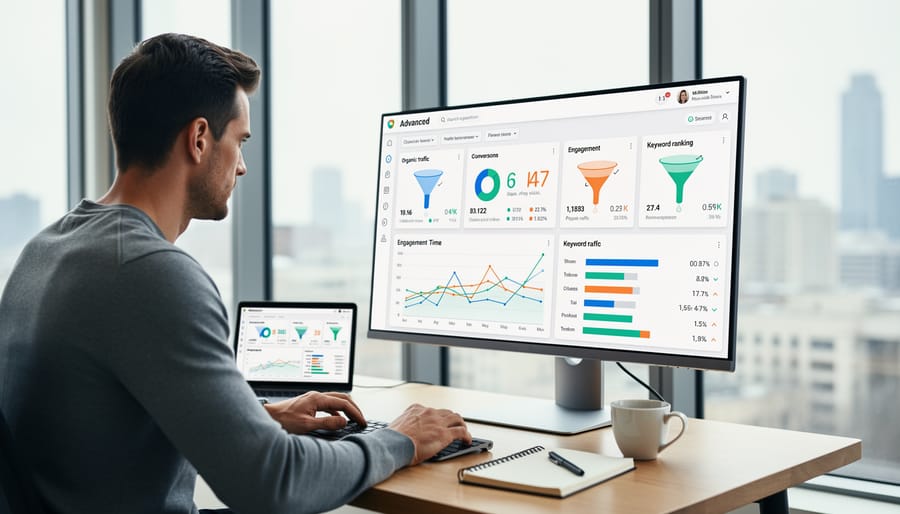
Google Analytics reveals technical SEO problems that might otherwise go unnoticed for months. When you spot pages with high bounce rates exceeding 70% combined with average session durations under 10 seconds, you’re likely facing page speed issues. Mobile usability problems become apparent when mobile bounce rates significantly exceed desktop metrics for the same content. Track your site speed reports in Analytics to identify consistently slow-loading pages that need optimization. Monitor landing page behavior flow to detect crawlability concerns—if users can’t navigate beyond certain pages, search engines probably can’t either. Set up automated alerts for sudden traffic drops on specific pages, which often signal indexing problems or broken links. These behavior patterns provide early warning signals that allow you to address technical issues before they seriously impact your search rankings. The key is establishing baseline metrics and monitoring deviations that indicate underlying technical problems requiring immediate attention.
Setting Up AI-Enhanced Analytics for Maximum SEO Impact
Choosing the Right AI Analytics Tools
When selecting AI analytics tools to enhance your Google Analytics SEO efforts, prioritize platforms that offer seamless integration with your existing GA4 setup. Look for solutions that provide automated data analysis and pattern recognition, eliminating hours of manual report building and allowing you to focus on strategy implementation rather than spreadsheet management.
Essential features should include automated anomaly detection that alerts you to sudden traffic changes, keyword performance shifts, or technical SEO issues before they significantly impact rankings. The best tools offer natural language processing capabilities, enabling you to ask questions in plain English and receive actionable insights rather than raw data dumps.
Evaluate reporting quality carefully. Your chosen platform should generate client-ready reports that clearly communicate SEO performance in business terms, not just technical metrics. This transparency strengthens client relationships and demonstrates ROI effectively.
Consider automation capabilities for routine tasks like rank tracking, competitor monitoring, and content gap analysis. Tools that automatically suggest optimization opportunities based on your Google Analytics data save considerable time while ensuring you don’t miss valuable improvements.
Finally, assess the learning curve and support resources available. The right tool should be accessible to your team without requiring extensive technical training, allowing quick implementation and faster results.
Configuration Best Practices for SEO Focus
Proper configuration is essential for gathering SEO-relevant data that AI tools can analyze effectively. Start by enabling Site Search tracking in your Google Analytics property settings. This captures what visitors search for on your site, revealing content gaps and keyword opportunities that AI can identify patterns in.
Set up custom events to track SEO-critical interactions like PDF downloads, video plays, and external link clicks. These signals help AI systems understand user engagement beyond standard pageviews. Configure enhanced measurement in GA4 to automatically capture scroll depth and outbound clicks without manual tagging.
Create specific conversion goals aligned with your SEO objectives. Track newsletter signups from organic traffic, contact form submissions, and content downloads as separate goals. This granular approach gives AI tools distinct data points to correlate with organic search performance.
Build audience segments that isolate organic traffic by landing page type, device category, and engagement level. Segment new versus returning organic visitors to understand content effectiveness across the customer journey. These segments enable AI to deliver targeted recommendations rather than generic insights.
Configure custom dimensions for content categories, author names, and publish dates. This metadata allows AI analysis to identify which content types and topics drive the strongest organic performance. Ensure your tracking excludes internal traffic and bot activity by setting up appropriate filters.
Link your Google Search Console account to Google Analytics to combine ranking data with user behavior metrics. This integration provides AI systems with the complete picture needed to recommend actionable SEO improvements based on actual performance data rather than isolated metrics.
Turning AI Insights Into SEO Actions That Drive Results
From Insight to Content Optimization
Once you’ve identified patterns through AI analysis of your Google Analytics data, the next step is transforming those insights into tangible improvements. Start by prioritizing underperforming pages that show high traffic potential but low conversion or engagement rates. These pages represent quick wins where small optimizations can yield significant results.
Use your AI-generated insights to refine existing content strategically. If the data reveals that visitors from certain search queries bounce quickly, examine whether your content actually addresses their intent. Update title tags, meta descriptions, and headers to better align with what users are searching for. When AI search engine optimization tools identify semantic gaps in your content, fill those gaps by adding relevant sections that answer related questions your audience is asking.
For new content creation, let the data guide your topic selection and structure. If analytics show strong performance for specific keyword clusters or content formats, replicate that success across similar topics. Create content briefs based on actual user behavior patterns rather than assumptions about what your audience wants.
Set up automated monitoring to track how your optimizations perform over time. Establish clear benchmarks before making changes, then measure improvements in organic traffic, time on page, and conversion rates. This feedback loop allows you to continuously refine your approach and double down on strategies that deliver measurable results for your business.
Automating Your SEO Workflow
Manual SEO monitoring consumes valuable time that could be spent on strategy and execution. Google Analytics allows you to create automated reports and intelligent alerts that keep you informed without constant dashboard checking.
Start by setting up custom email reports that deliver key SEO metrics weekly or monthly. Navigate to any report in Google Analytics, click the “Share” button, and configure scheduled emails with your preferred frequency. Include organic traffic trends, top-performing pages, and conversion data to maintain visibility into your SEO performance.
Intelligent alerts are your early warning system for significant changes. Under the Admin section, create custom alerts that notify you when organic traffic drops below a threshold, bounce rates spike unexpectedly, or conversions from organic search decline. These proactive notifications let you address issues before they become serious problems.
For client communication, automated reporting eliminates the manual work of compiling monthly updates. Use Google Analytics’ built-in scheduling features or third-party tools like Google Data Studio to create branded dashboards that automatically update with fresh data. Clients receive consistent insights without requiring your team to manually generate reports each cycle.
Set up goal completion alerts to celebrate wins as they happen. When organic traffic drives valuable conversions, automated notifications keep your team informed and motivated.
The key is configuring automation that provides actionable information without overwhelming your inbox. Start with essential metrics, refine your thresholds based on actual performance patterns, and gradually expand your automated workflow as you identify additional monitoring needs. This approach transforms Google Analytics from a passive reporting tool into an active partner in your SEO success.

Common Pitfalls to Avoid With AI SEO Analytics
While AI-powered analytics tools offer tremendous potential, they also introduce new risks that can undermine your SEO efforts. Understanding these common pitfalls helps you leverage AI effectively without falling into costly traps.
The first major mistake is over-reliance on automation. AI tools excel at processing data and identifying patterns, but they can’t replace strategic thinking. Automatically implementing every AI recommendation without human review can lead to misguided optimization efforts that ignore your business context, brand voice, or customer needs. Always validate AI suggestions against your broader marketing objectives before taking action.
Data quality issues pose another significant challenge. AI systems are only as reliable as the data they analyze. If your Google Analytics tracking contains errors, such as incorrect event configurations, duplicate page views, or bot traffic, the AI will generate flawed insights. Before trusting AI recommendations, audit your data collection setup to ensure accuracy. Clean data inputs produce actionable outputs.
Misinterpreting AI recommendations frequently trips up even experienced marketers. AI tools identify correlations and patterns, but correlation doesn’t equal causation. When an AI system suggests optimizing certain pages or keywords, dig deeper to understand the underlying reasoning. Ask whether the recommendation aligns with actual user behavior and business goals rather than simply acting on surface-level metrics.
Finally, don’t neglect the human strategic element. AI handles data analysis efficiently, but it lacks understanding of market nuances, competitive positioning, and brand differentiation. Your SEO strategy should combine AI-generated insights with human expertise in customer psychology, industry trends, and creative problem-solving. The most successful approach treats AI as a powerful assistant that enhances, rather than replaces, human decision-making in your optimization efforts.
The integration of AI-enhanced Google Analytics fundamentally transforms SEO from educated guesswork into a precise, data-driven system. By automating the heavy lifting of data analysis, pattern recognition, and performance tracking, you free up valuable time to focus on what truly matters: strategic planning and meaningful client communication.
Instead of spending hours manually sifting through reports and trying to identify trends, automated AI tools surface actionable insights instantly. This shift allows you to dedicate more energy to crafting compelling content strategies, building stronger client relationships, and implementing high-impact optimizations that move the needle.
The key takeaway is simple: you don’t need to be a data scientist to leverage sophisticated analytics. Modern AI tools handle the complex analysis while you maintain control over strategic decisions. This approach scales efficiently whether you’re managing a single website or multiple client accounts.
Start by implementing one automated workflow this week. Monitor the time saved and insights gained over the next 30 days. As you experience the benefits firsthand, you’ll discover how AI-enhanced analytics doesn’t just improve your SEO results—it fundamentally changes how you work, giving you the bandwidth to focus on growth and delivering exceptional value to your clients.
Leave a Reply