Stop Losing Live Stream Leads: How CRM Tracking Captures Every Opportunity
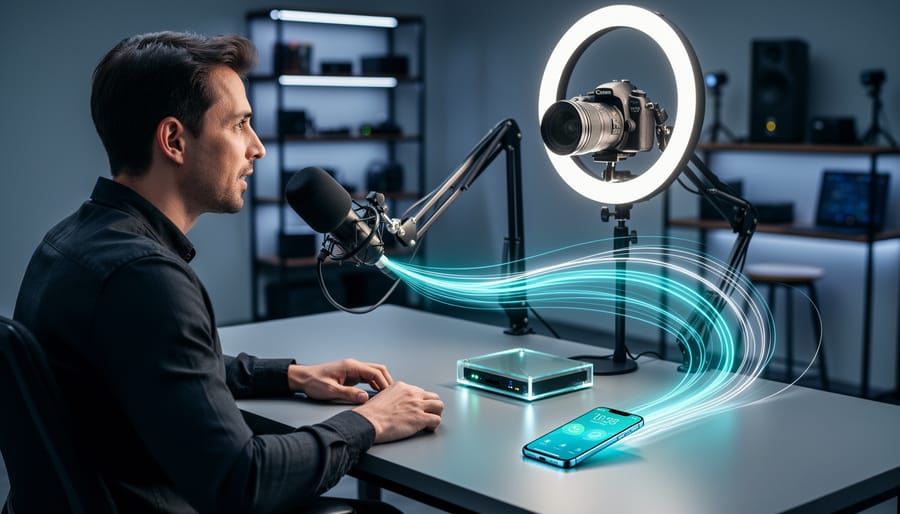
Capture every lead from your live streams by implementing automated CRM tracking that records viewer information the moment someone engages with your content. Set up form integrations that sync directly to your customer relationship management system, ensuring names, email addresses, and engagement data flow automatically into your sales pipeline without manual data entry. Configure trigger-based follow-ups that send personalized messages within minutes of a viewer registering, requesting information, or asking questions during your broadcast.
Monitor real-time engagement metrics to identify hot leads based on watch time, chat participation, and interaction patterns, then prioritize your outreach accordingly. When you optimize your live streams for lead capture, you create multiple touchpoints where potential customers can enter your sales funnel, from registration forms to call-to-action buttons embedded throughout your presentation.
The difference between successful live stream campaigns and missed opportunities often comes down to how quickly and systematically you track and respond to interested viewers. Without automated CRM lead tracking, valuable prospects slip through the cracks during the chaos of live broadcasting. Your team cannot manually record every comment, question, or registration while simultaneously delivering compelling content.
This guide walks you through establishing a lead tracking system that works seamlessly with your live streaming platform, ensuring you convert viewer interest into qualified sales opportunities. You will learn to set up automated workflows, segment your audience based on behavior, and create follow-up sequences that nurture leads until they are ready to buy.
Why Live Streams Need Dedicated CRM Lead Tracking
The Real-Time Challenge
Live streams create a unique pressure point for lead capture that traditional marketing channels simply don’t face. When viewers engage with your content in real-time—asking questions, leaving comments, or expressing interest—the window for meaningful response is measured in minutes, not hours or days. Unlike email campaigns or static content where prospects expect delayed responses, live stream audiences anticipate immediate interaction and acknowledgment.
This immediacy presents a critical challenge: every second of delay increases the likelihood that a warm lead will cool off or move on to a competitor. Research consistently shows that businesses who respond to leads within five minutes are exponentially more likely to convert them compared to those who wait even an hour. During a live stream, dozens or even hundreds of potential customers might signal interest simultaneously, making manual tracking virtually impossible.
Without automated capture mechanisms integrated directly into your CRM, valuable contact information gets lost in comment threads, chat logs, or temporary viewer lists that disappear once the stream ends. The solution requires systems that instantly log engagement signals and trigger follow-up workflows without requiring manual intervention during your broadcast.
What Happens When Leads Slip Through
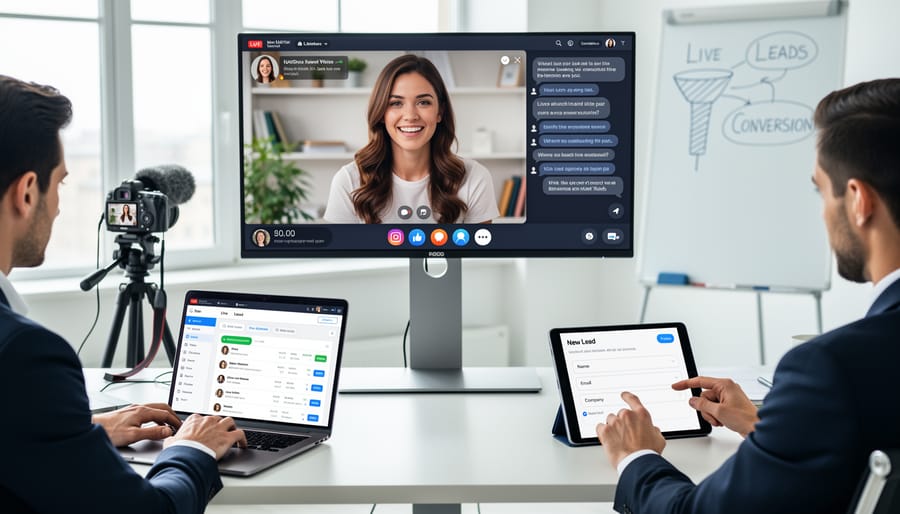
When potential customers engage with your live stream—asking questions, requesting information, or expressing interest—but aren’t immediately captured, you’re watching revenue walk out the door. Consider a real estate agent hosting a property tour with 200 viewers. If just 10% show genuine interest but only half get properly followed up, that’s 10 missed opportunities that could represent tens of thousands in potential commissions.
The numbers compound quickly. A software demo attracting 500 viewers might generate 50 serious inquiries. Without automated tracking, your team scrambles to manually identify who these prospects were, what they asked, and when to follow up. By the time you piece together this information from scattered comments and chat logs, competitors have already responded.
Beyond lost sales, inconsistent lead capture damages your brand reputation. When interested prospects never receive the promised follow-up, they perceive your business as disorganized or indifferent. This impression spreads through reviews and word-of-mouth, affecting future campaigns. The cost isn’t just one missed sale—it’s the cumulative effect of diminished trust, wasted marketing spend, and opportunities that never materialize into your pipeline.
How CRM Lead Tracking Works for Live Streams
Automated Lead Capture Points
Modern CRM systems can automatically capture leads at multiple touchpoints during your live streaming events, eliminating the need for manual data entry and reducing the risk of lost opportunities.
Registration data serves as your first capture point. When viewers sign up for your live stream, their contact information flows directly into your CRM. This includes name, email address, company details, and any custom fields you’ve added to understand their interests or pain points.
Chat interactions provide valuable lead intelligence throughout your broadcast. Advanced systems track who’s commenting, what questions they’re asking, and their engagement level. This real-time data helps you identify highly interested prospects who actively participate in the conversation rather than passive viewers.
Form submissions during live streams represent high-intent leads. Whether you’re offering downloadable resources, requesting demo bookings, or collecting survey responses, these submissions automatically sync with your CRM. The system timestamps each interaction, giving you context for follow-up conversations.
Q&A participation indicates serious buyer interest. When attendees submit questions, your CRM can flag these individuals as warm leads and trigger appropriate follow-up sequences. The specific questions asked also provide insight into where they are in the buying journey.
Poll responses and reactions to interactive elements add another layer of lead qualification data. These micro-engagements help score leads based on their level of interaction, allowing your sales team to prioritize outreach to the most engaged prospects.
From Stream to CRM in Seconds
The moment a viewer expresses interest during your live stream, automation takes over to ensure that lead information flows directly into your CRM system. This seamless transfer happens in real-time, eliminating the frustrating delay between lead generation and follow-up action.
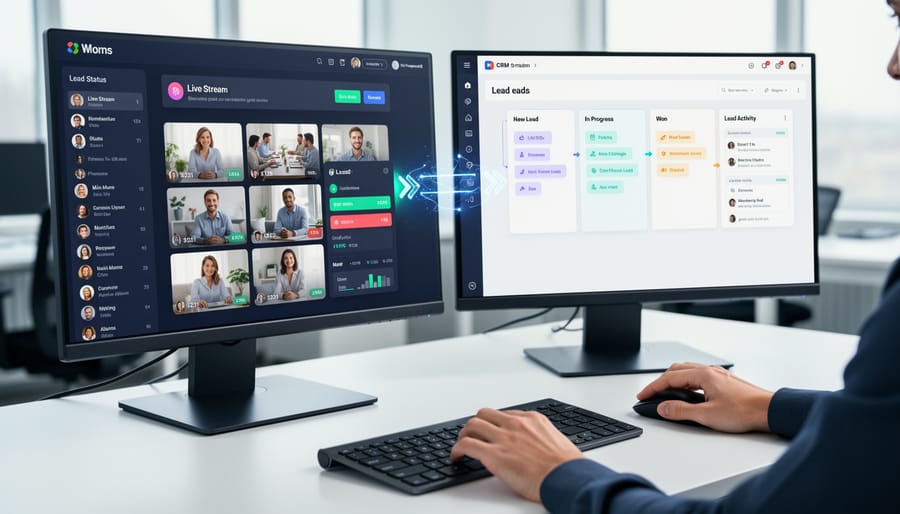
Modern integration tools capture essential details like names, email addresses, comments, and engagement patterns as they occur. Instead of manually copying information from chat logs or comment sections hours after your stream ends, the system automatically creates new lead records with complete accuracy. This immediate data transfer means your sales team can access fresh leads within seconds, not days.
The accuracy advantage cannot be overstated. Manual data entry introduces typos, missed information, and inconsistent formatting that complicate your follow-up efforts. Automated lead capture standardizes every entry, ensuring phone numbers appear in the correct format, email addresses are error-free, and all relevant context from the live interaction is preserved.
Beyond speed and accuracy, automation provides something equally valuable: context preservation. The system captures which products the lead asked about, what questions they raised, and how they engaged during the stream. This rich information arrives in your CRM alongside basic contact details, giving your team everything needed for personalized follow-up conversations.
The result is a frictionless pipeline where no lead falls through the cracks due to delayed or inaccurate data entry. Your team focuses on building relationships rather than administrative tasks, maximizing the return on your live streaming investment.
Essential Features Your CRM Lead Tracking System Needs
Real-Time Data Synchronization
During live streaming events, leads can flood in within seconds, making instant data synchronization critical for your success. When someone expresses interest during your stream, that information needs to reach your CRM immediately—delays mean missed follow-up opportunities and potentially lost sales.
Real-time data synchronization ensures your sales team can act on hot leads while prospects are still engaged. This automated transfer eliminates manual data entry errors and ensures no lead slips through the cracks, even when you’re managing hundreds of inquiries simultaneously.
Look for CRM systems that offer bidirectional syncing, which updates information across all platforms instantly. Your synchronization tools should capture contact details, engagement metrics, questions asked, and specific interests expressed during the stream. The best solutions provide immediate notifications to your team, allowing them to prioritize high-intent prospects and initiate personalized follow-up communications within minutes.
Choose platforms with proven uptime records and backup systems to prevent data loss during technical issues. Reliable synchronization transforms your live streaming efforts from chaotic lead collection into an organized, automated pipeline that drives conversions.
Engagement Level Tracking
Modern CRM systems can automatically qualify leads based on how viewers interact with your live stream content. Instead of manually reviewing every attendee, tracking engagement levels allows your system to identify the most promising prospects through their actions.
Key engagement metrics that signal genuine interest include comment frequency and quality, reactions or emoji responses, poll participation, and total viewing time. When someone watches 80% of your product demonstration and asks multiple questions in the chat, that behavior indicates stronger purchase intent than someone who joins for two minutes and leaves.
Your CRM can assign lead scores based on these interactions. For example, a viewer who downloads resources during the stream, engages in Q&A sessions, and stays until the end might automatically receive a “hot lead” designation. This triggers immediate follow-up actions like personalized email sequences or priority placement in your sales queue.
The system eliminates guesswork by creating objective qualification criteria. Your sales team receives notifications only when prospects meet specific engagement thresholds, allowing them to focus their energy on conversations most likely to convert. This automated approach ensures no engaged viewer falls through the cracks while preventing wasted effort on disinterested attendees.
Automated Follow-Up Triggers
Modern CRM systems eliminate the risk of manual follow-up by automatically triggering personalized sequences based on specific viewer actions during your live streams. When a viewer asks a question in the chat, downloads a resource, or remains engaged for a certain duration, the system instantly categorizes them and initiates the appropriate communication pathway.
These automated triggers work continuously in the background, ensuring no lead falls through the cracks. For instance, if someone watches 80% of your product demonstration stream, they might automatically receive a detailed product guide within minutes, followed by a consultation offer two days later. LinkedIn-integrated CRM systems excel at this by combining professional profile data with behavioral triggers for highly relevant follow-ups.
The key advantage is consistency and timing. Your system can send the right message at precisely the right moment, whether that’s immediately after the stream ends or several days later, based on predefined rules you establish. This automation frees your team from manual tracking while maintaining personalized communication that nurtures leads effectively toward conversion.
Setting Up Your Live Stream Lead Tracking System
Choosing Compatible Platforms
When selecting a live streaming platform, integration capabilities should be your primary consideration. The most effective platforms offer native CRM integrations or robust API connections that automatically sync lead data without manual intervention. Before committing to any platform, verify that it can capture essential information like viewer email addresses, engagement metrics, and interaction timestamps directly into your CRM system.
Consider whether you need multi-platform streaming capabilities, as broadcasting across multiple channels simultaneously can maximize your reach while maintaining centralized lead tracking. Popular platforms like YouTube Live, LinkedIn Live, and Facebook Live each offer different integration options and audience demographics, so evaluate which aligns best with your target market.
Test the data flow between your chosen platform and CRM before your first live event. Create a trial stream to ensure lead information transfers correctly, fields map accurately, and automated workflows trigger as expected. Pay attention to real-time synchronization speed, as delayed data transfer can hinder immediate follow-up opportunities. Platforms that support custom registration forms within the streaming interface provide richer lead qualification data from the start.
Mapping Your Lead Capture Strategy
Start by identifying the key moments in your live stream where viewers demonstrate genuine interest. These trigger points typically include specific questions asked in chat, requests for demos, pricing inquiries, or interactions with product features. Map these actions to appropriate lead capture forms that collect progressively more detailed information.
At the awareness stage, when viewers first engage with your stream, request only essential details like name and email address. This low-friction approach prevents drop-off while establishing initial contact. As engagement deepens, introduce additional fields such as company name, role, or specific pain points that align with your solution.
Design your capture strategy around automated workflows that respond to viewer behavior in real-time. When someone downloads a resource you mention during the stream, trigger an immediate follow-up sequence. If they click a product link, route that lead to your sales team with context about what sparked their interest.
Document which information fields are mandatory versus optional at each stage. Balance your need for qualifying data against the reality that every additional form field reduces completion rates. Test different combinations to find the sweet spot between gathering useful information and maintaining conversion momentum.
Testing Before You Go Live
Before launching your live stream lead tracking system, run thorough tests to prevent costly mistakes. Start by conducting a test stream with your team, submitting multiple lead forms using different devices and browsers. Verify that each submission appears correctly in your CRM with all fields populated accurately. Check that automated follow-up emails trigger immediately and contain the right information. Test your notification system to ensure your sales team receives real-time alerts when new leads arrive. Simulate common scenarios like duplicate entries, partial form completions, and simultaneous submissions to identify potential bottlenecks. Review data mapping between your streaming platform and CRM to confirm information flows to the correct fields. Finally, have team members who weren’t involved in setup attempt to process test leads, ensuring your workflow is intuitive and functional. This testing phase typically takes 2-3 hours but saves countless hours of troubleshooting later and prevents losing valuable leads during your actual event.
Maximizing Lead Quality Through Smart Tracking
Scoring Leads Based on Stream Behavior
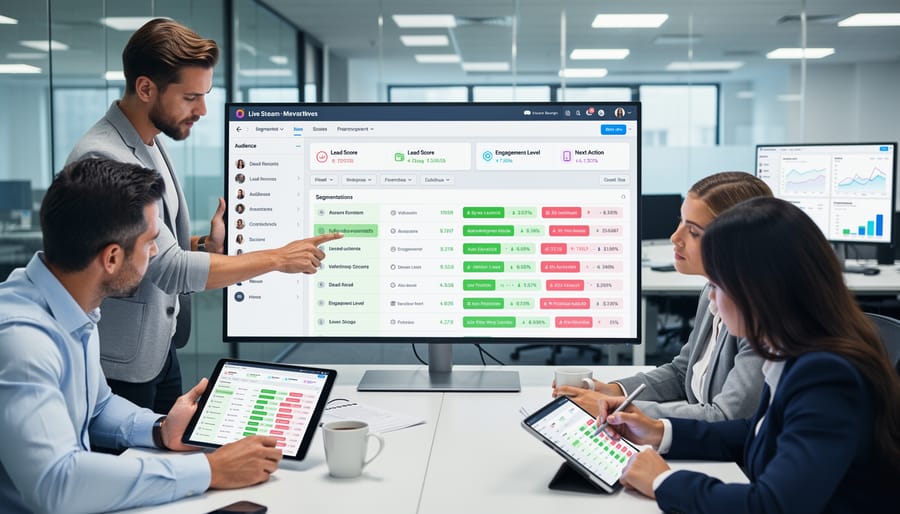
Assigning lead scores based on stream behavior helps you prioritize follow-up efforts and identify your most engaged prospects. Start by tracking key engagement metrics like total watch time, session duration, and whether viewers stayed through critical moments such as product demonstrations or call-to-action announcements.
Create a point-based scoring system that rewards meaningful interactions. For example, assign higher scores to viewers who ask questions in chat, click on embedded links, or download resources during the stream. Conversion actions like scheduling a demo or completing a registration form should receive the highest point values.
Configure your CRM to automatically calculate and update lead scores in real-time as viewer behavior unfolds. This automation eliminates manual data entry and ensures your sales team can immediately identify hot leads who need prompt attention.
Set threshold scores that trigger specific actions. When a lead reaches 75 points, for instance, your system can automatically send a personalized follow-up email or notify a sales representative to make contact within 24 hours. This structured approach ensures no high-value prospect slips through the cracks while preventing your team from wasting time on minimally engaged viewers who may not be ready to buy.
Segmentation for Targeted Follow-Up
Not every lead deserves the same follow-up message. Your CRM should automatically segment viewers based on their specific actions during your live stream. When someone asks questions about pricing, they belong in a different segment than those who only watched product demos.
Set up automated tagging rules that categorize leads by the content they engaged with, questions they submitted in the chat, or specific products they inquired about. This allows your team to send personalized follow-up messages that reference exact topics each viewer cared about.
Create segments for engagement levels too. Viewers who stayed for the entire stream and participated actively require different nurturing than those who dropped off early. Your CRM can track watch time and interaction frequency to assign leads to appropriate follow-up sequences automatically, ensuring each person receives relevant communication that moves them closer to conversion.
Common Mistakes That Cost You Leads
Even with the best CRM system in place, simple oversights can mean the difference between a thriving lead pipeline and missed opportunities. Understanding these common mistakes helps you protect your investment in live stream marketing.
The most critical error is delayed follow-up. When leads come in during a live stream, their interest is at its peak. Waiting 24 hours or more to respond dramatically reduces conversion rates. Set up automated welcome messages that trigger immediately after someone submits their information. This keeps engagement high while your team prepares personalized follow-ups.
Many businesses also fail to segment their live stream leads properly. Not all viewers have the same level of interest or readiness to buy. Someone who stayed for the entire stream and asked multiple questions requires different nurturing than someone who dropped in for five minutes. Tag leads based on their engagement level, questions asked, and specific interests mentioned during the stream.
Another pitfall is treating live stream leads the same as other lead sources. These prospects have already invested time watching your content, which means they’re typically warmer than cold leads. Your CRM should reflect this with tailored workflows that acknowledge their existing familiarity with your brand.
Incomplete data capture causes problems down the line. During the excitement of a live stream, it’s tempting to ask for minimal information to reduce friction. However, collecting at least a name, email, and specific interest area gives your team the context needed for meaningful follow-up conversations.
Finally, neglecting to track engagement metrics within your CRM leaves you guessing about what works. Monitor which streams generate the most qualified leads, what topics resonate, and which calls-to-action convert best. This data informs your future live stream strategy and improves overall lead quality.
In today’s fast-paced digital landscape, proper CRM lead tracking for live streams isn’t just a nice-to-have feature—it’s a competitive necessity. Every live broadcast represents an investment of time, resources, and creative energy. Without automated systems capturing viewer information and engagement signals in real-time, you’re essentially leaving money on the table while your competitors build stronger pipelines.
The businesses that thrive are those that recognize the window of opportunity during live events is incredibly narrow. Manual processes simply cannot keep pace with the speed of live interactions. By implementing automated CRM lead tracking systems, you ensure that every comment, question, and registration is captured instantly and routed to the appropriate follow-up workflow.
This approach transforms your live streams from one-time events into sustainable lead generation engines. The automation frees your team to focus on what matters most—building genuine relationships and delivering value to prospects. Start small if needed, but start now. Choose a system that integrates seamlessly with your existing tools, set up your automated workflows, and watch as your client communication becomes more timely, relevant, and effective. Your future sales pipeline depends on the systems you implement today.
Leave a Reply