AI Design That Actually Works: Why UX Expertise Makes Artificial Intelligence Better

In today’s digital transformation landscape, AI’s impact on UX design represents a critical intersection where technology meets human needs. While artificial intelligence powers increasingly sophisticated solutions, its success hinges on one fundamental factor: user experience. The marriage of AI and UX design isn’t just a technological convenience—it’s a business imperative that determines whether your AI solutions will drive meaningful results or become another unused tool.
Companies integrating AI without considering UX design principles face diminishing returns, user resistance, and implementation failures. Research shows that 70% of digital transformation initiatives fall short of their goals, largely due to poor user adoption and interface design. By approaching AI development through a UX-first lens, organizations can create solutions that not only leverage advanced capabilities but also resonate with human users’ needs, behaviors, and expectations.
This strategic alignment between AI capabilities and user experience design principles creates a powerful foundation for digital solutions that drive real business value, enhance user adoption, and deliver measurable ROI. Understanding this relationship is crucial for any organization looking to successfully implement AI-driven solutions in today’s competitive marketplace.
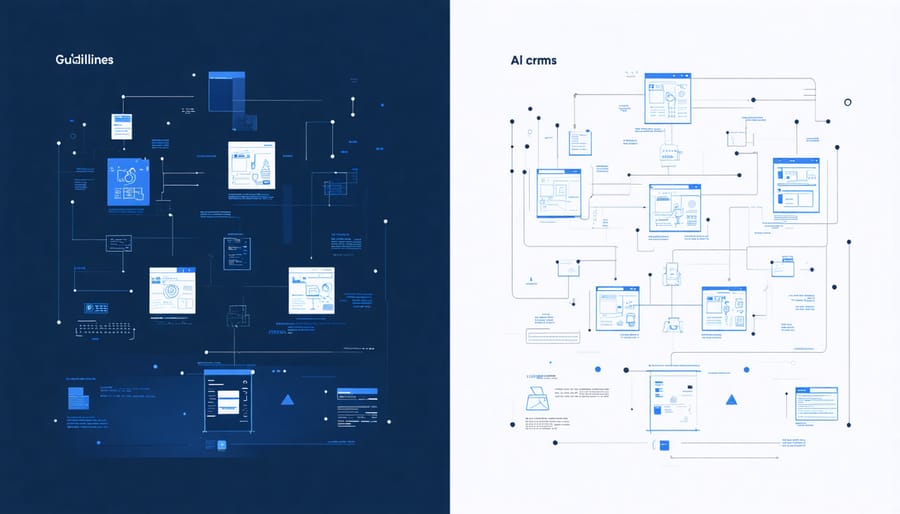
The Critical Partnership Between AI and UX Design
Why AI Alone Isn’t Enough
While AI technology offers impressive capabilities in automation and data processing, it cannot fully replace the human-centered approach that UX design brings to the table. AI excels at analyzing patterns and making data-driven decisions, but it often lacks the emotional intelligence and contextual understanding that human designers provide.
Consider a chatbot that provides technically correct answers but fails to empathize with frustrated customers, or an AI-generated interface that’s logically structured but feels cold and unintuitive. These scenarios demonstrate why the human element remains crucial in design decisions.
UX designers bridge the gap between AI’s computational power and users’ emotional needs. They ensure that AI solutions remain accessible, engaging, and aligned with human expectations. This combination of AI efficiency and human-centered design creates experiences that are not only functional but also delightful and meaningful.
Success in AI implementation requires balancing automated intelligence with human insight. While AI can process vast amounts of user data, UX designers interpret these insights through the lens of human psychology, cultural nuances, and ethical considerations.
The UX Designer’s Role in AI Implementation
UX designers play a crucial role in ensuring AI implementations deliver genuine value to users while remaining accessible and intuitive. They serve as the bridge between complex AI capabilities and human needs, focusing on three key areas: user research, interface design, and interaction patterns.
Through continuous user research and testing, UX designers identify pain points and opportunities where AI can meaningfully enhance the user experience. They translate technical AI features into user-friendly interfaces that feel natural and approachable, ensuring that automated processes don’t overwhelm or frustrate users.
In the implementation phase, UX designers work closely with development teams to establish clear feedback mechanisms, helping users understand when they’re interacting with AI and what to expect from these interactions. They design error handling processes that maintain user trust and create escalation paths when AI assistance isn’t sufficient.
Additionally, UX designers ensure AI solutions remain transparent and controllable, giving users appropriate levels of oversight while maintaining efficiency. They develop frameworks for measuring AI system effectiveness from the user’s perspective, enabling continuous improvement based on real-world usage patterns.
Real Business Benefits of AI-UX Integration
Enhanced Customer Experience
When AI-powered customer experience solutions are enhanced with thoughtful UX design, they deliver significantly better results for businesses. The key lies in creating a seamless blend between artificial intelligence capabilities and user-centered design principles.
By incorporating UX insights into AI implementations, businesses can ensure their automated systems remain intuitive and accessible. For instance, chatbots become more effective when their conversation flows are designed with real user behaviors in mind, rather than purely algorithmic responses. This human-centered approach helps maintain engagement while leveraging AI’s processing power.
The synergy between AI and UX also enables more personalized experiences. When AI algorithms are guided by UX research, they can better predict user preferences and adapt accordingly. This leads to more relevant recommendations, smoother navigation paths, and higher customer satisfaction rates.
Moreover, UX input helps identify and eliminate potential friction points in AI interactions. Whether it’s simplifying complex data visualizations or creating more natural voice interfaces, UX designers ensure that AI solutions remain user-friendly while maintaining their sophisticated capabilities.
Businesses that prioritize both AI capabilities and UX considerations typically see higher adoption rates, increased customer loyalty, and better ROI from their technology investments. The key is to view AI not just as a technical solution, but as part of a broader customer experience strategy.
Improved ROI on AI Investments
When implementing AI solutions, businesses often focus solely on technological capabilities while overlooking user experience design. However, combining AI with strong UX principles can significantly boost your return on investment. Studies show that companies integrating UX design into their AI implementations achieve up to 40% higher user adoption rates and reduced training costs.
The financial benefits become evident through decreased customer support inquiries, improved task completion rates, and enhanced user satisfaction. For instance, AI-driven personalization ROI can increase by 25-30% when paired with intuitive user interfaces and seamless customer journeys.
Cost efficiency gains materialize through:
– Reduced development cycles by identifying user needs early
– Lower maintenance costs due to fewer user-reported issues
– Decreased customer churn from improved user satisfaction
– Minimized training requirements for end-users
– Enhanced employee productivity through intuitive AI tools
Organizations that prioritize UX in their AI implementations typically see break-even points 30% faster than those focusing solely on AI functionality. This acceleration in ROI comes from quicker user adoption, reduced resistance to change, and more efficient use of AI capabilities across the organization.
To maximize returns, businesses should allocate 15-20% of their AI project budgets to UX design and testing. This investment typically pays for itself within the first year through reduced support costs and increased user productivity.
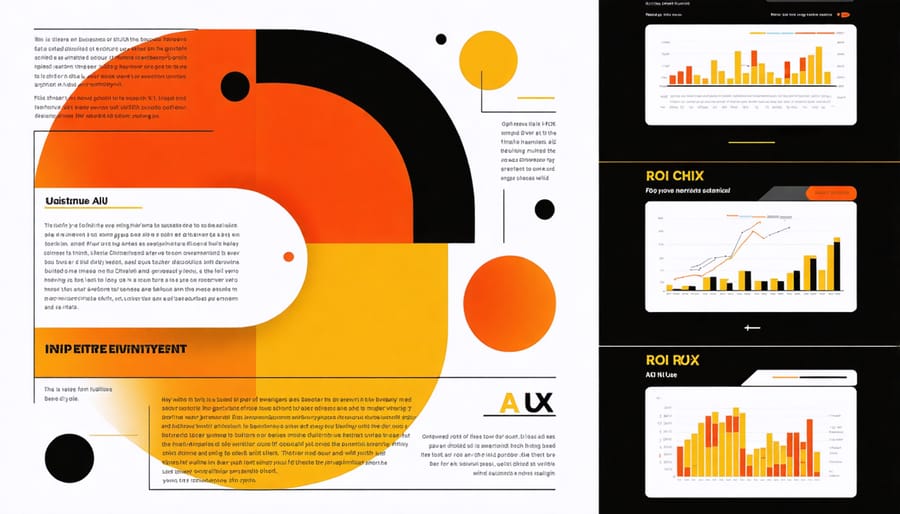
Implementing AI with UX Best Practices
User Research in AI Development
Effective user research is crucial for developing AI solutions that truly meet user needs and expectations. By incorporating user feedback throughout the development process, businesses can create more intuitive and valuable AI applications that drive real results.
Start by establishing clear research objectives focused on understanding user pain points, workflows, and expectations. Conduct a mix of qualitative and quantitative research methods, including user interviews, surveys, and observational studies. This multi-faceted approach provides deeper insights into how users interact with AI systems and what improvements they need.
Implement continuous feedback loops during development by creating prototypes and conducting regular testing sessions. This iterative process allows you to refine AI features based on actual user behavior rather than assumptions. Consider using user feedback analysis tools to process and categorize user responses efficiently, helping identify patterns and priority areas for improvement.
Remember to focus on both technical performance and emotional responses. While AI systems must be accurate and efficient, they should also create positive user experiences that build trust and encourage adoption. Document user frustrations, concerns about AI interaction, and moments of satisfaction to guide development decisions.
Create user personas and journey maps specific to AI interactions, helping development teams understand the context in which their solutions will be used. This understanding ensures that AI features align with real user needs rather than just showcasing technical capabilities.
Finally, establish clear metrics for measuring user satisfaction and system effectiveness. Regular monitoring of these metrics helps track improvements and identifies areas requiring attention, ensuring your AI solution continues to evolve with user needs.

Testing and Iteration Strategies
Testing AI-powered interfaces requires a systematic approach that combines traditional UX testing methods with AI-specific considerations. Start by establishing clear metrics for success, including both quantitative measurements like task completion rates and qualitative feedback about user satisfaction and trust in the AI system.
A/B testing becomes particularly crucial when implementing AI features, allowing you to compare different versions of AI interactions and their impact on user behavior. Focus on testing small, incremental changes rather than complete overhauls to identify specific elements that influence user experience.
User feedback loops should be implemented at multiple touchpoints. Consider using:
– In-app feedback mechanisms
– User surveys after AI interactions
– Session recordings to observe natural user behavior
– Usability testing sessions with think-aloud protocols
Monitor AI performance metrics alongside user experience data. Track accuracy rates, response times, and error handling while simultaneously gathering user satisfaction scores and engagement metrics. This dual approach ensures both technical performance and user needs are addressed.
Regular iteration cycles should follow a structured process:
1. Collect user feedback and performance data
2. Analyze patterns and pain points
3. Prioritize improvements based on impact
4. Implement changes incrementally
5. Measure results against baseline metrics
Remember that AI systems learn and evolve over time, making continuous testing essential. Schedule regular review periods to assess how system improvements affect user experience, and be prepared to adjust your testing strategy as the AI capabilities expand.
Maintaining the Human Touch
While artificial intelligence offers powerful capabilities, maintaining a human-centric approach is crucial for successful implementation. The key lies in striking the right balance between automation efficiency and personal connection. This means designing AI systems that understand and respond to human emotions, preferences, and individual needs.
One effective strategy is implementing conversational AI that mirrors natural human dialogue. Rather than rigid, robotic responses, AI systems should use context-aware language, appropriate tone variations, and even personality traits that align with your brand voice. This helps users feel more comfortable and builds trust in their interactions with AI-powered solutions.
Organizations should also focus on creating AI interfaces that provide clear feedback and explanations for their actions. When users understand why an AI system makes certain decisions or recommendations, they’re more likely to trust and engage with it. This transparency helps bridge the gap between artificial intelligence and human understanding.
Personalization plays a vital role in maintaining the human touch. AI systems should learn from user interactions and adapt their responses accordingly, creating experiences that feel tailored to each individual. However, it’s essential to balance personalization with privacy concerns and give users control over their data and preferences.
Regular user testing and feedback collection are crucial for ensuring AI solutions remain user-friendly. This includes monitoring both quantitative metrics and qualitative feedback about how users feel during their interactions with AI systems. Use this information to continuously refine and improve the human elements of your AI implementation.
Remember that AI should complement human interactions rather than replace them entirely. Design your systems with clear escalation paths to human support when needed, and ensure users can easily switch between automated and human assistance. This hybrid approach helps maintain the perfect balance between efficiency and personal connection.
The synergy between AI and UX design is not just a trend but a fundamental requirement for successful digital transformation. As we’ve explored throughout this article, integrating user experience principles into AI development leads to more effective, user-friendly, and profitable solutions that drive business growth and customer satisfaction.
By prioritizing UX in AI implementation, businesses can significantly reduce user frustration, increase adoption rates, and maximize their return on investment. The key lies in maintaining a human-centered approach while leveraging the power of artificial intelligence to enhance, rather than replace, human interactions.
To successfully implement AI with strong UX principles, businesses should:
1. Start with a clear understanding of user needs and pain points
2. Develop AI solutions that address specific business challenges
3. Continuously gather and analyze user feedback
4. Iterate and improve based on real-world usage data
5. Maintain transparency in AI-driven processes
6. Ensure accessibility and inclusivity in design
Looking ahead, organizations must establish cross-functional teams that bring together AI experts and UX designers from the outset of any project. This collaboration ensures that technical capabilities align with user needs and business objectives.
For businesses ready to take the next step, consider:
– Conducting a UX audit of existing AI implementations
– Investing in UX research before deploying new AI solutions
– Training teams on both AI capabilities and UX best practices
– Developing clear metrics to measure the success of AI-UX integration
– Creating feedback loops for continuous improvement
Remember that successful AI implementation is an ongoing process rather than a one-time project. By maintaining a strong focus on user experience throughout the AI development lifecycle, businesses can create solutions that not only perform well technically but also deliver meaningful value to end-users.
The future of AI lies not in its technical sophistication alone, but in its ability to serve human needs effectively and intuitively. Organizations that recognize and act on this reality will be better positioned to succeed in an increasingly AI-driven marketplace.
Leave a Reply