How 3D Virtual Reality 360 Ads Are Transforming Customer Engagement

**Revolutionize Your Advertising Strategy with Immersive 360-Degree Experiences**
Transform flat, forgettable ads into interactive journeys that place customers inside your product, service, or brand story. 3D virtual reality 360 advertising extensions merge immersive technology with strategic ad placement, delivering conversion rates up to 300% higher than traditional display ads. This isn’t science fiction—it’s a practical marketing tool that businesses of all sizes now use to stand out in crowded digital spaces.
Unlike conventional ads that viewers scroll past in seconds, 360-degree VR experiences keep audiences engaged for an average of 2-3 minutes. Real estate companies showcase properties through virtual walkthroughs. Hotels transport potential guests into their suites and amenities. Automotive dealers let prospects explore vehicle interiors without visiting showrooms. E-commerce brands create immersive product demonstrations that answer questions before customers ask them.
The technology runs on standard devices—smartphones, tablets, and web browsers—requiring no specialized equipment from your audience. Implementation integrates seamlessly with existing advertising platforms through automated processes that simplify campaign management and performance tracking. You’ll measure engagement through concrete metrics: interaction time, hotspot clicks, completion rates, and direct conversion attribution.
This guide breaks down exactly what 3D VR 360 advertising extensions are, how they function within your marketing ecosystem, implementation costs, platform compatibility, and whether this format aligns with your business goals. You’ll gain the clarity needed to make an informed investment decision backed by real-world case studies and measurable outcomes.
What Are Virtual Reality Ad Extensions?
Virtual Reality ad extensions represent an evolution in digital advertising that allows businesses to showcase products and services through immersive 3D and 360-degree experiences. Unlike traditional display ads that present static images or basic videos, VR ad extensions transform advertisements into interactive environments where potential customers can explore, examine, and engage with offerings from multiple angles.
These extensions integrate seamlessly with major advertising platforms like Google Ads and Facebook Ads, functioning as enhanced ad formats that complement your existing campaigns. When users click on a VR-enabled ad, they’re transported into a three-dimensional space where they can navigate around products, view detailed features, or experience services in a simulated environment—all without leaving the ad interface.
The key distinction from standard display advertising lies in the level of engagement. Traditional ads deliver information passively, while VR extensions create active participation. A furniture retailer, for instance, can let customers virtually place a sofa in different room settings, rotating and viewing it from every perspective. A real estate company can offer virtual property tours directly within their ad units.
Understanding AR vs VR advertising helps clarify that VR extensions fully immerse users in controlled digital environments, whereas augmented reality overlays digital elements onto the real world.
Technically, these extensions use WebGL and 360-degree photography or 3D modeling to render experiences that work across devices—from desktop browsers to mobile phones and VR headsets. The automation capabilities of modern ad platforms handle most technical heavy lifting, making implementation more accessible than many business owners initially expect.
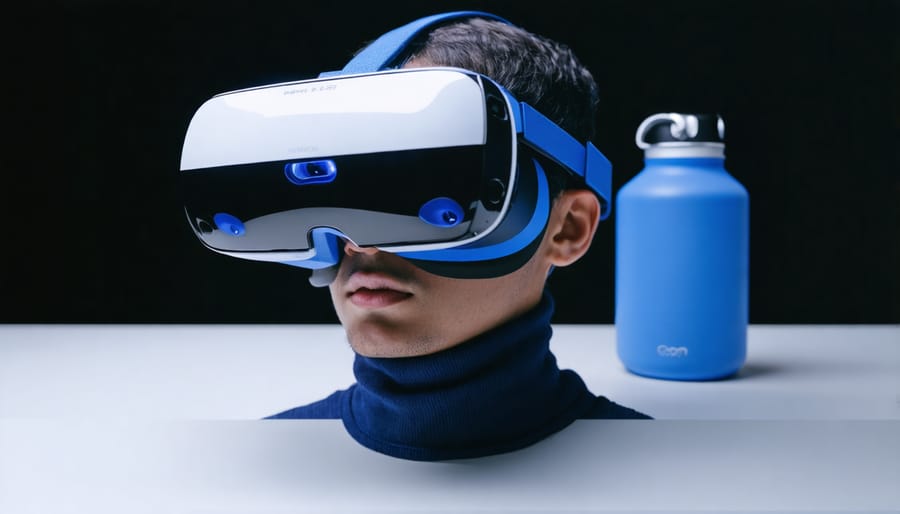
The Power of 3D Virtual Reality 360 in Advertising
Immersive Product Showcases
Brands are transforming customer engagement by deploying 360-degree virtual environments that showcase products in unprecedented detail. These immersive showrooms allow potential buyers to examine items from every angle, zoom into specific features, and experience products in realistic contexts—all without physical inventory or location constraints.
Leading furniture retailers now offer virtual showrooms where customers navigate through fully furnished spaces, examining textures, dimensions, and color variations in real-time. Automotive brands create digital experience centers where buyers explore vehicle interiors, customize configurations, and take virtual test drives. This approach reduces the need for extensive physical showrooms while expanding geographic reach.
The business advantage is clear: reduced overhead costs, increased customer engagement time, and higher conversion rates. Analytics track which product features customers examine most, providing valuable insights for sales conversations. Implementation has become increasingly accessible through automated platforms that require minimal technical expertise. Companies report that customers who interact with 360-degree product showcases demonstrate 40% higher purchase intent compared to traditional product pages, making this technology a practical investment for businesses seeking competitive differentiation in digital commerce.
Enhanced Storytelling Capabilities
VR 360 advertising transforms passive viewers into active participants within your brand story. Rather than watching a traditional ad, customers step inside immersive experiences that create lasting emotional connections. A real estate company can transport prospects through properties from anywhere in the world, while a resort lets potential guests explore amenities before booking.
This experiential approach generates deeper engagement than conventional advertising methods. When viewers control their perspective and explore environments at their own pace, they form authentic connections with your brand. The technology works seamlessly alongside AI-powered ad creatives to deliver personalized narratives that resonate with specific audience segments.
The storytelling advantage becomes measurable through increased time spent with your content—VR 360 ads typically hold attention 5-10 times longer than standard video formats. Customers remember these experiences because they’ve lived them, not just watched them. For businesses, this translates into stronger brand recall, higher conversion rates, and differentiation in crowded markets. The key is crafting narratives that align with customer pain points while showcasing solutions through immersive demonstration rather than explanation.
Industries Seeing the Biggest Impact
Real Estate and Property Tours
Real estate agents are experiencing dramatic results with 360-degree virtual property tours, cutting average time-to-sale by up to 30%. These immersive walkthroughs allow potential buyers to explore properties remotely, filtering out unqualified leads before scheduling in-person visits. Modern platforms automate tour creation by stitching together 360-degree photos, requiring minimal technical expertise. Buyers can navigate rooms naturally, zoom into details, and revisit properties on their own schedule—streamlining the decision-making process. This technology proves particularly valuable for out-of-town buyers or investment properties, where multiple physical visits aren’t feasible. Agencies implementing virtual tours report increased engagement metrics and more serious inquiries, as prospects arrive better informed. The automated nature of these tours means your listings work around the clock, providing consistent client communication without additional staff resources.
Automotive Showrooms
Automotive dealerships are transforming their sales process through 360-degree virtual showrooms that let customers explore vehicles from anywhere. Potential buyers can examine interior details, color options, and features without visiting a physical location. This technology enables automated virtual test drives where users navigate through different driving scenarios and road conditions, significantly reducing the sales cycle. Dealerships report higher engagement rates and more qualified leads since customers arrive better informed about their preferences. The technology integrates seamlessly with existing CRM systems, automatically capturing user interactions and preferences to streamline follow-up communication. For dealerships, this means fewer tire-kickers and more serious buyers, while customers appreciate the convenience of exploring inventory on their schedule before committing to an in-person visit.

Travel and Hospitality
Travel and hospitality businesses are leveraging 3D virtual reality 360 to transform how potential guests explore destinations before booking. Hotels can now offer immersive virtual tours showcasing rooms, amenities, and surrounding attractions, allowing customers to experience properties firsthand from anywhere. This transparency builds trust and sets accurate expectations, directly reducing cancellation rates by up to 40%. Vacation rental platforms and resorts using 360-degree previews report higher conversion rates, as travelers feel confident in their choices. The technology automates the preview process—once created, virtual tours work around the clock without staff involvement. For travel marketers, integrating VR tours into ad campaigns creates competitive differentiation while addressing customer hesitation. Properties that appear standard in photos gain new appeal when prospects can virtually walk through spaces and assess layouts themselves.
Retail and E-Commerce
3D VR 360 transforms online shopping by letting customers virtually explore products and retail spaces before purchasing. Businesses can create immersive showrooms where customers examine items from every angle, test product configurations, and experience scale and fit—all from their devices. This technology reduces return rates by setting accurate expectations and increases conversion rates by building buyer confidence. E-commerce platforms can automate virtual store tours that guide customers through curated collections, while product demonstrations showcase features more effectively than static images or traditional videos, delivering an in-store experience online.
Getting Started: What You Need to Know

Content Creation Requirements
Creating compelling 360-degree VR content requires strategic decisions about equipment and production capabilities. At minimum, you’ll need a 360-degree camera like the Insta360 or GoPro MAX, which range from $300 to $5,000 depending on quality requirements. These cameras capture immersive footage that forms the foundation of your VR ad extensions.
For post-production, accessible software options include Adobe Premiere Pro with VR plugins, or specialized platforms like Autopano Video Pro. These tools allow you to stitch footage, add interactive elements, and optimize content for various platforms.
The build-versus-outsource decision depends on your volume and budget. In-house production makes sense if you plan frequent campaigns and have team capacity for a learning curve of approximately two to three months. Starting costs typically run $5,000-$10,000 for equipment and software.
Outsourcing works better for occasional campaigns or when speed matters. Agencies charge $2,000-$15,000 per project but deliver professional results immediately. Many businesses start by outsourcing to test effectiveness, then build internal capabilities once ROI is proven. Consider hybrid approaches where you capture raw footage in-house but outsource technical editing to balance cost and quality efficiently.
Platform Selection and Integration
Major advertising platforms are rapidly adopting VR extensions, though availability varies. Meta (Facebook/Instagram) leads the market with comprehensive 360-degree video ad support, allowing seamless integration into news feeds and Stories. YouTube offers 360-degree video ads that work across desktop and mobile, making it accessible for businesses already invested in video marketing. Google Ads recently introduced VR-compatible display formats, enabling you to extend your existing ad platforms into immersive experiences.
Compatibility considerations are straightforward: ensure your 360 content renders properly on both VR headsets and standard mobile devices, as most users will initially view on smartphones. File formats matter—MP4 with equirectangular projection works universally, while specialized formats may limit reach.
Integration with current campaigns requires minimal disruption. Most platforms allow A/B testing between traditional and VR ads within the same campaign structure. Start by converting one high-performing ad into 360 format, maintain identical targeting parameters, and measure engagement differences. This approach preserves your existing automation workflows while testing new formats. Upload specifications typically mirror standard video requirements, with metadata tags indicating 360 capability.
Measuring Success: Key Performance Metrics
Tracking the right data points is essential for understanding whether your VR ad investment delivers real business value. Unlike traditional display ads, 360-degree VR experiences generate unique engagement signals that reveal genuine customer interest.
Start by monitoring **engagement rate**—the percentage of users who interact with your VR content beyond passive viewing. Industry benchmarks show quality VR ads achieve engagement rates between 15-30%, significantly higher than standard display formats. Track how many viewers actually click to explore your 360-degree environment versus scrolling past it.
**Time spent** is your second critical metric. VR experiences that resonate with audiences typically hold attention for 45-90 seconds, compared to 2-3 seconds for traditional ads. This extended engagement window provides meaningful exposure to your brand message and product features.
**Interaction depth** measures how thoroughly users explore your virtual space. Are they rotating the full 360 degrees? Clicking on hotspots? Zooming into product details? These behaviors signal strong purchase intent and help you understand which elements capture attention most effectively.
Most importantly, connect these key performance metrics to actual **conversion tracking**. Set up proper attribution to measure how VR ad interactions lead to website visits, form submissions, or sales. Use UTM parameters and conversion pixels to build a complete picture from initial engagement to final purchase.
Modern advertising platforms offer automated reporting dashboards that compile these metrics in real-time, eliminating manual data collection. Review your VR campaign performance weekly for the first month, then adjust creative elements, targeting parameters, or budget allocation based on what the data reveals about your audience’s behavior and preferences.
Automating Your VR Ad Campaign Management
Managing 3D virtual reality 360 ad campaigns doesn’t have to consume your entire workday. Modern automation tools handle the heavy lifting, from deployment across multiple platforms to continuous performance tracking and real-time optimization.
These platforms automatically schedule and launch your VR ads, eliminating manual uploads and reducing human error. More importantly, they run simultaneous A/B tests on different creative variations, audience segments, and placement options—analyzing which combinations drive the highest engagement and conversion rates. Instead of manually checking dashboards throughout the day, you’ll receive automated alerts when campaigns hit predetermined thresholds or when performance anomalies occur.
Budget allocation becomes smarter through automated bidding strategies that shift spending toward top-performing placements in real-time. The system continuously monitors metrics like view-through rates, interaction depth, and conversion paths, making micro-adjustments that would be impossible to manage manually.
This automation frees your team to focus on what truly matters: developing creative strategies that resonate with your audience and maintaining meaningful client communication. You’ll spend less time in spreadsheets and more time interpreting insights, refining messaging, and building relationships.
The result? Campaigns that perform better with less manual intervention, allowing small to medium-sized teams to compete effectively without hiring additional staff. Your role shifts from campaign operator to strategic director, where your expertise creates the most value.
Common Pitfalls and How to Avoid Them
Even the most innovative 3D virtual reality 360 campaigns can fall flat without proper planning. Here are the critical mistakes to watch for and how to sidestep them.
**Motion Sickness and Discomfort**: Rapid movements, shaky camera work, or excessive visual effects can trigger nausea in VR users. Keep your 360 content smooth and stable. Avoid quick panning or sudden transitions. Test your ads with multiple users before launch to identify potential comfort issues.
**File Size and Loading Times**: High-resolution 360 videos create massive files that slow loading speeds, causing users to abandon your ad before it starts. Compress files appropriately without sacrificing quality, and consider offering progressive loading or lower-resolution options for users with slower connections.
**Ignoring Mobile Users**: Most VR ad engagement happens on mobile devices, yet many campaigns optimize only for headset experiences. Ensure your 360 content works seamlessly on smartphones with gyroscopic controls and doesn’t require specialized equipment to view.
**Overwhelming Complexity**: Adding too many interactive elements, hotspots, or navigation options confuses viewers rather than engaging them. Start simple—focus on one clear call-to-action and a straightforward narrative path. You can always scale up complexity in future campaigns based on performance data.
**Poor Audience Targeting**: Deploying VR ads to audiences unfamiliar with the technology wastes budget. Target tech-savvy demographics first, or invest in brief tutorial overlays explaining how to interact with your 360 content. Match your distribution platforms to where your specific audience actually engages with immersive content.
The competitive landscape is shifting rapidly, and businesses that adopt 3D virtual reality 360 advertising extensions now will gain significant market advantage over those who wait. Early adopters benefit from lower costs per engagement, less competitive auction environments, and the opportunity to refine their approach while the technology is still emerging.
Start by testing VR ad extensions on one high-performing campaign with a modest budget allocation—even 10-15% of your existing ad spend can provide valuable performance data. Focus on products or services that benefit from immersive visualization, such as real estate, tourism, retail products, or event promotions. Most platforms offer user-friendly tools that automate much of the technical setup, allowing you to create basic 360-degree experiences without extensive production resources.
Monitor key metrics including engagement time, interaction rates, and conversion data compared to standard ad formats. Use these insights to optimize your content and gradually expand successful campaigns. The businesses seeing the strongest returns are those that start small, learn from real performance data, and scale strategically based on measurable results. Begin your VR advertising journey today—the technology is accessible, the market is ready, and your competitors are already exploring these opportunities.
Leave a Reply