How Biometric Recognition Turns Shoppers Into Your Most Loyal Customers

Biometric technology has evolved from fingerprint scanners at security checkpoints to sophisticated systems that recognize faces, voices, and even typing patterns. Modern businesses leverage these identification methods to streamline customer authentication, personalize marketing campaigns, and automate routine interactions without manual verification steps.
Understanding which biometric examples fit your business model directly impacts your ability to deliver seamless customer experiences while maintaining security. Facial recognition systems now power retail analytics that track customer demographics and shopping patterns in real-time. Voice biometrics authenticate callers instantly during customer service interactions, eliminating password resets and reducing wait times. Fingerprint scanning enables quick payment authorization at checkout, while iris scanning provides high-security access control for sensitive areas.
Behavioral biometrics represent the emerging frontier, analyzing how customers type, swipe, or navigate websites to detect fraud and personalize content delivery. These passive systems work continuously in the background, requiring no active participation from users. Gait recognition identifies individuals by their walking patterns, useful for premises security without intrusive checkpoints.
The practical applications extend beyond security into marketing automation. Retailers use facial analysis to gauge emotional responses to product displays. Financial institutions deploy voice recognition to verify identity during account updates. Healthcare providers implement palm vein scanning for accurate patient identification.
Each biometric type offers distinct advantages for automating client interactions while raising specific privacy considerations that require transparent communication policies and compliance frameworks.
What Biometric Recognition Means for Modern Marketing
Biometric recognition refers to automated technology that identifies individuals based on their unique physical or behavioral characteristics. In marketing, this translates to identifying customers through features like facial patterns, voice signatures, or even typing rhythms, enabling businesses to deliver truly personalized experiences without requiring manual data entry or login credentials.
Unlike traditional marketing approaches that segment audiences into broad categories, biometric technology allows for instant individual recognition. When a customer walks into your store or accesses your digital platform, the system can identify them immediately and tailor the experience to their preferences, purchase history, and behavior patterns. This level of AI-driven personalization creates seamless interactions that feel natural rather than intrusive.
The business benefits are substantial and measurable. First, customer retention improves significantly when people receive personalized experiences that acknowledge their individual preferences and history. Studies show that recognized customers spend more and visit more frequently. Second, conversion rates increase because recommendations and offers align precisely with individual needs rather than generic demographic assumptions. Third, automation potential reduces operational costs while improving accuracy, as systems handle recognition and personalization without requiring staff intervention or customer effort.
For small to medium-sized businesses, this technology democratizes capabilities once reserved for large corporations. Automated biometric systems can manage customer communication, track preferences, and trigger personalized marketing sequences without expanding your team. The key is understanding which biometric applications align with your business model and customer expectations. Modern solutions range from simple facial recognition at point-of-sale to sophisticated behavioral analysis across digital touchpoints, each offering different levels of implementation complexity and customer value.
Facial Recognition: Creating Seamless In-Store Experiences
Real-World Applications in Retail
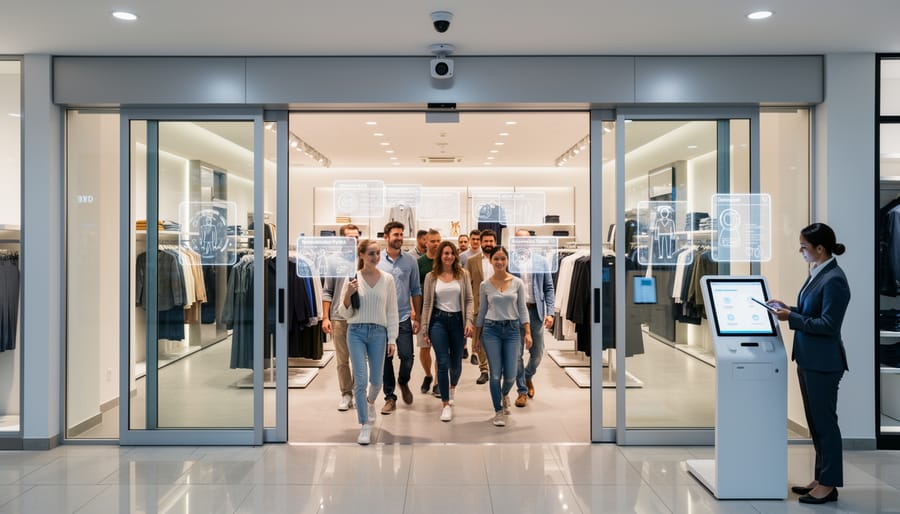
Major retailers are already deploying facial recognition systems to transform the customer experience and streamline operations. When loyalty program members enter stores, cameras identify them and trigger personalized welcome messages on digital displays near entrances. Store associates receive instant notifications on their devices, showing customer purchase history and preferences, enabling them to provide tailored assistance immediately.
Product recommendation systems use facial recognition combined with purchase data to display relevant suggestions on in-store kiosks. A customer who frequently buys organic produce might see promotions for new organic items as they walk through different departments. This automated approach eliminates guesswork and delivers timely, relevant offers without requiring customers to scan apps or cards.
Checkout automation represents the most significant operational improvement. Amazon Go stores pioneered this model, where facial recognition links customers to their accounts upon entry. Sensors track selected items, automatically charging accounts when customers leave. Similar systems are expanding to conventional supermarkets, reducing wait times and labor costs while improving accuracy. These implementations show how biometric technology directly impacts both customer satisfaction and operational efficiency, making it particularly valuable for businesses seeking competitive advantages through automation.
Privacy Considerations and Best Practices
Implementing biometric technologies requires clear consent frameworks and transparent customer communication. Before collecting any biometric data, obtain explicit permission from customers and clearly explain what information you’re gathering, how it will be used, and how long it will be stored. This isn’t just good practice—it’s a legal requirement in most jurisdictions.
Your consent process should be straightforward and accessible. Use plain language to describe biometric data collection in your privacy policy and at the point of collection. Automated systems can streamline this by presenting consent requests at appropriate touchpoints, such as during initial account setup or before activating features like facial recognition login.
Provide customers with easy options to opt out or delete their biometric data. Implement automated processes that allow users to manage their data preferences through self-service portals, reducing administrative burden while maintaining transparency.
Store biometric data securely using encryption and limit access to authorized personnel only. Regular security audits and compliance checks should be automated where possible to ensure ongoing protection. Remember that biometric data is particularly sensitive—unlike passwords, fingerprints and facial features cannot be changed if compromised.
Maintain open communication channels where customers can ask questions about your biometric practices. Clear, proactive communication builds trust and encourages adoption of personalized features.
Fingerprint and Touch Recognition for Seamless Transactions
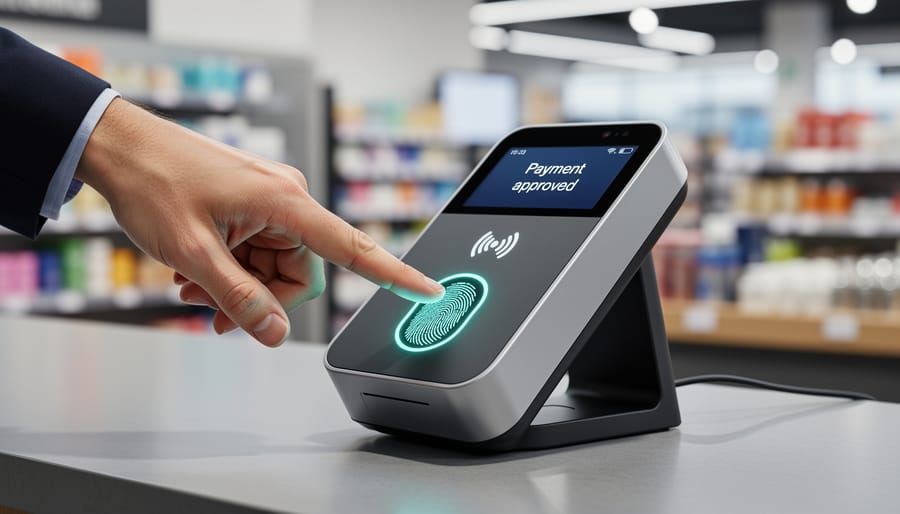
Fingerprint recognition has revolutionized how businesses handle transactions by eliminating the need for passwords, PIN codes, or physical cards. Major retailers like Whole Foods and Kroger now enable customers to complete purchases using fingerprint scanners at checkout, reducing transaction time by up to 50% while maintaining robust security standards.
Payment platforms have integrated fingerprint authentication across multiple touchpoints. Apple Pay and Google Pay leverage device-based fingerprint sensors, allowing customers to authorize purchases with a simple touch. This streamlined approach has increased mobile payment adoption rates by 35% among businesses that implemented the technology, as customers appreciate both the speed and security.
Loyalty programs benefit significantly from fingerprint-enabled systems. Starbucks and Sephora use fingerprint authentication in their mobile apps, allowing customers to access rewards, personalize orders, and complete transactions without navigating multiple screens or remembering account details. This frictionless experience encourages repeat purchases and strengthens customer relationships.
Banking institutions have deployed fingerprint biometrics for ATM access and mobile banking applications. Bank of America and Wells Fargo report that fingerprint authentication reduces customer service inquiries related to forgotten passwords by 60%, while simultaneously improving account security. Customers can check balances, transfer funds, and manage accounts using only their fingerprint.
For businesses implementing fingerprint systems, the infrastructure requirements are minimal. Most modern smartphones and tablets include built-in fingerprint sensors, eliminating additional hardware costs. The automated nature of fingerprint verification reduces staff training needs while accelerating customer service capabilities. Small businesses can integrate fingerprint payment options through existing point-of-sale systems, typically requiring only a software update and basic staff orientation to maintain seamless operations.
Voice Recognition: Personalizing Customer Service at Scale
Voice Commerce Applications
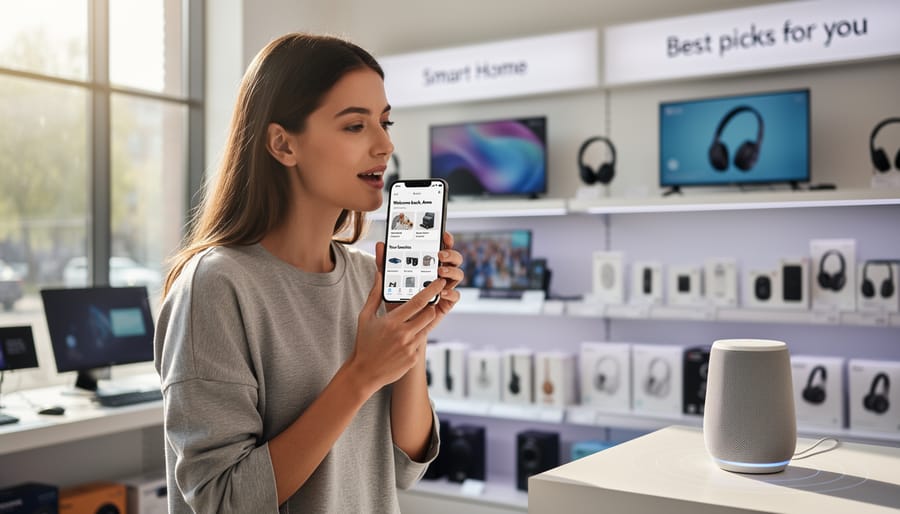
Voice biometrics is transforming online shopping by enabling hands-free, personalized purchasing experiences. Major retailers now use AI voice assistants that recognize individual customers through their unique vocal characteristics, automatically accessing purchase history and preferences to streamline the buying process.
For example, grocery chains allow customers to reorder frequently purchased items simply by speaking to their smart devices. The system identifies the shopper through voice patterns and processes orders without requiring manual login or payment entry. This automated approach reduces friction and increases conversion rates significantly.
Fashion retailers leverage voice commerce to provide personalized recommendations based on previous purchases and browsing behavior. When a customer asks for suggestions, the system recognizes their voice, accesses their style profile, and offers curated options matching their preferences and size requirements.
The technology also enhances customer service by routing callers to appropriate departments based on voice identification, eliminating repetitive account verification steps. This improvement in client communication creates smoother interactions while maintaining robust security protocols that protect sensitive information throughout the transaction process.
Automated Customer Support with Personal Touch
Voice recognition biometric systems are transforming customer support by identifying callers instantly through their unique vocal characteristics. When a customer calls, the system authenticates their identity within seconds, eliminating tedious verification questions and security protocols. This automated approach allows your support team to access customer history and preferences immediately, creating a seamless experience that feels remarkably personal.
The technology works by analyzing over 100 vocal features including pitch, tone, and speaking patterns. This means customers bypass the frustration of password resets or security question verification, while your business reduces average call handling time by up to 45 seconds per interaction. The efficiency gains free your team to focus on building meaningful relationships rather than administrative tasks.
Beyond phone support, voice commerce platforms now integrate voice biometrics to personalize shopping experiences automatically. The system recognizes repeat customers and tailors product recommendations based on previous purchases and stated preferences.
This automation doesn’t replace human connection—it enhances it. Your support staff spends less time on routine verification and more time addressing actual customer needs, strengthening relationships that drive repeat business and referrals.
Iris and Retina Scanning in Premium Customer Programs
Iris and retina scanning represent the pinnacle of biometric security in premium customer programs, offering unparalleled accuracy for high-value experiences. These eye-scanning technologies analyze unique patterns in the colored ring around the pupil or the blood vessel patterns at the back of the eye, making them virtually impossible to replicate.
Leading luxury hotels deploy iris scanning for their most exclusive clientele, enabling seamless check-in to presidential suites and private lounges without traditional keys or cards. Guests simply glance at a scanner, and the system instantly verifies their identity and grants access to premium facilities. This automated process eliminates wait times while maintaining exceptional security standards.
Private aviation companies use retina scanning for their elite membership programs, streamlining boarding procedures for charter flights and exclusive terminals. The technology confirms passenger identity within seconds, replacing physical boarding passes with a quick eye scan that cannot be shared, lost, or stolen.
High-end retailers incorporate iris recognition at VIP shopping events, automatically identifying top-tier customers upon entry and alerting personal shoppers to prepare customized selections. The system links to purchase history and preferences, enabling staff to deliver personalized service immediately.
Financial institutions utilize these technologies for private banking clients accessing secure vault areas or conducting high-value transactions. The enhanced security provides peace of mind for both businesses and customers handling sensitive assets.
While implementation costs remain higher than other biometric options, the combination of superior accuracy and friction-free customer experience makes eye-scanning technology ideal for premium programs where security and exclusivity are paramount.
Behavioral Biometrics: The Invisible Personalization Tool
Unlike facial recognition or fingerprint scanning, behavioral biometrics work silently in the background, analyzing how customers interact with digital platforms rather than what they look like. This technology tracks unique patterns in typing speed, mouse movements, touchscreen pressure, and navigation habits to create invisible user profiles that enhance both security and personalization.
Every person types differently—some hunt and peck, others flow steadily, and many pause at predictable intervals. These patterns, combined with how you move your cursor or swipe through pages, create a behavioral signature as unique as a fingerprint. Systems automatically learn these patterns and use them to detect anomalies that might indicate fraud or unauthorized access.
For businesses, this technology delivers two major benefits without requiring customer effort. First, it strengthens fraud prevention by flagging suspicious activity when someone’s behavioral patterns suddenly change. If a logged-in user typically types 60 words per minute but suddenly drops to 20, the system recognizes this deviation and triggers additional security measures. Second, it enables seamless personalization by understanding user preferences through their browsing behavior, allowing platforms to adjust content delivery, navigation paths, and recommendations automatically.
The beauty of behavioral biometrics lies in its passive nature. Customers don’t need to remember additional passwords or stop to scan their faces. The authentication and personalization happen automatically as they interact with your platform. This customer behavior data continuously refines user experiences while maintaining security protocols in the background, creating frictionless interactions that keep customers engaged without compromising protection. For businesses managing multiple customer touchpoints, this automated approach reduces friction while gathering valuable insights about genuine user behavior patterns.
Implementing Biometric Marketing: What Business Owners Need to Know
Getting started with biometric marketing doesn’t require a massive investment or complete system overhaul. The key is to begin with pilot programs that address specific pain points in your customer journey.
Start by evaluating your current marketing infrastructure. Most businesses already collect some behavioral data through website analytics and email platforms. These automated processes can serve as your foundation. Consider implementing emotion detection software for video content testing or incorporating behavioral biometrics into your website analytics before investing in more sophisticated facial recognition or voice analysis systems.
Budget considerations vary significantly based on technology choice. Basic sentiment analysis tools integrated with existing platforms might cost between $500 to $2,000 monthly, while comprehensive facial recognition systems for retail environments can require $10,000 to $50,000 in initial setup costs. Cloud-based solutions offer lower entry points and scalable pricing models that align with business growth.
Choose technology partners carefully. Look for vendors with proven compliance frameworks, transparent data handling practices, and experience in your industry. Request case studies demonstrating measurable results. Reliable partners should provide clear documentation about how they maintain regulatory compliance and support your client communication efforts regarding data usage.
Compliance requirements cannot be overlooked. Before collecting any biometric data, implement clear opt-in mechanisms and privacy policies. Consult with legal counsel familiar with GDPR, CCPA, and industry-specific regulations. Budget for ongoing compliance monitoring as regulations continue evolving.
Set realistic ROI expectations. Most businesses see measurable improvements in engagement metrics within three to six months, but significant revenue impact typically requires nine to twelve months of optimization. Track specific metrics like conversion rates, customer lifetime value, and engagement depth rather than vanity metrics.
Begin with one use case, measure results rigorously, and expand strategically. This approach minimizes risk while building internal expertise and customer trust. Remember that successful biometric marketing balances technological capability with ethical responsibility and genuine value creation for customers.
Biometric recognition represents a significant opportunity for businesses ready to elevate their marketing personalization strategies. The examples we’ve explored demonstrate how facial recognition, fingerprint scanning, voice analysis, and behavioral biometrics can transform customer experiences from generic interactions into meaningful, personalized engagements. These technologies enable automated processes that recognize customers instantly, anticipate their preferences, and deliver tailored experiences without manual intervention.
For businesses considering biometric implementation, start by identifying which technology aligns best with your customer base and industry requirements. Retail environments might benefit from facial recognition for VIP identification, while financial services could leverage voice biometrics for secure client communication. The key is matching the technology to your specific business goals and customer expectations.
However, innovation must walk hand-in-hand with responsibility. Transparent data practices, robust security measures, and explicit customer consent aren’t optional—they’re essential for building trust and maintaining compliance with privacy regulations. Customers will embrace biometric personalization when they understand how their data protects their experience rather than compromises their privacy.
The competitive advantage goes to businesses that act strategically, implementing biometric solutions that genuinely enhance customer value while respecting individual privacy rights.
Leave a Reply