How VR and AR Are Transforming Customer Feedback Into Your Competitive Advantage
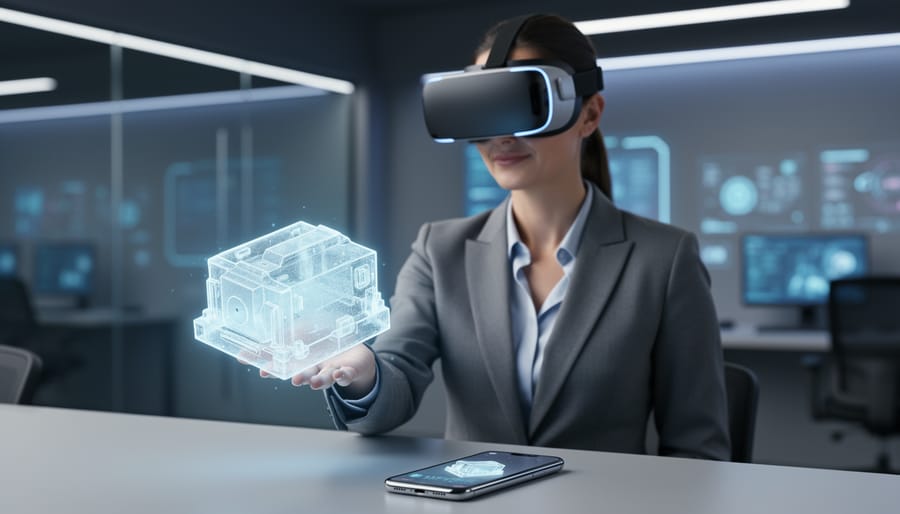
Evaluate your current customer engagement methods against immersive technology benchmarks by documenting which touchpoints could benefit from three-dimensional product visualization, virtual showrooms, or interactive demonstrations. Extended Reality (XR)—the umbrella term encompassing Virtual Reality (VR), Augmented Reality (AR), and Mixed Reality—is transforming how businesses collect feedback and deepen customer relationships, moving beyond traditional surveys and focus groups to capture authentic reactions in simulated environments.
Start with AR applications that overlay digital information onto physical products through smartphones, requiring minimal investment while delivering measurable engagement increases of 40-70% according to recent retail studies. These tools let customers visualize products in their actual spaces before purchase, reducing return rates and support inquiries while generating behavioral data that traditional methods miss.
Deploy VR experiences for high-value customer segments where purchase decisions justify the technology investment, particularly in real estate, automotive, travel, and complex B2B solutions. Understanding customers through VR reveals emotional responses and decision-making patterns that surveys cannot capture, providing actionable insights about product design, service delivery, and pain points.
Implement progressive adoption by testing one immersive experience with a targeted customer segment before scaling across your engagement strategy. Begin with WebXR solutions that run in standard browsers without requiring expensive headsets or app downloads, lowering barriers for both your team and customers while establishing proof of concept.
The barrier to entry has dropped dramatically—many businesses now launch AR campaigns for under $5,000 and gather customer feedback through these channels within weeks, not months. The question is no longer whether immersive technologies are relevant to customer engagement, but which applications deliver the highest return for your specific business model and audience.
Understanding XR, VR, and AR in Customer Engagement
Understanding these immersive technologies starts with knowing what sets them apart and how each one serves different business objectives. While the terms often get used interchangeably, Extended Reality (XR), Virtual Reality (VR), and Augmented Reality (AR) each offer distinct capabilities for gathering and enhancing customer feedback.
- Extended Reality (XR)
- An umbrella term encompassing all immersive technologies including VR, AR, and Mixed Reality. XR represents the full spectrum of real-to-virtual experiences that businesses can leverage for customer engagement.
- Virtual Reality (VR)
- A completely immersive digital environment that replaces the user’s physical surroundings, typically experienced through a headset. Businesses use VR to simulate product experiences, showroom tours, or training scenarios where customers can provide feedback in controlled virtual settings.
- Augmented Reality (AR)
- Technology that overlays digital information onto the real world through smartphones, tablets, or AR glasses. AR enables customers to visualize products in their own space before purchasing, making feedback more contextual and actionable.
The practical differences matter for your business strategy. VR works best when you need customers to experience something not physically accessible, like touring a property under construction or testing a vehicle configuration. AR excels when customers need to see how your product fits into their existing environment, such as furniture placement or paint color selection.
For VR and AR customer experience initiatives, consider your specific goals. If you’re collecting feedback on product designs or service concepts still in development, VR provides an isolated environment free from real-world distractions. If you need immediate feedback on how products integrate into customers’ daily lives, AR offers lower barriers to entry since most customers already own AR-capable smartphones.
The key is matching the technology to your engagement objective rather than adopting it for novelty’s sake. Small to medium-sized businesses often find AR more accessible as a starting point, requiring less specialized equipment while still delivering valuable customer insights.
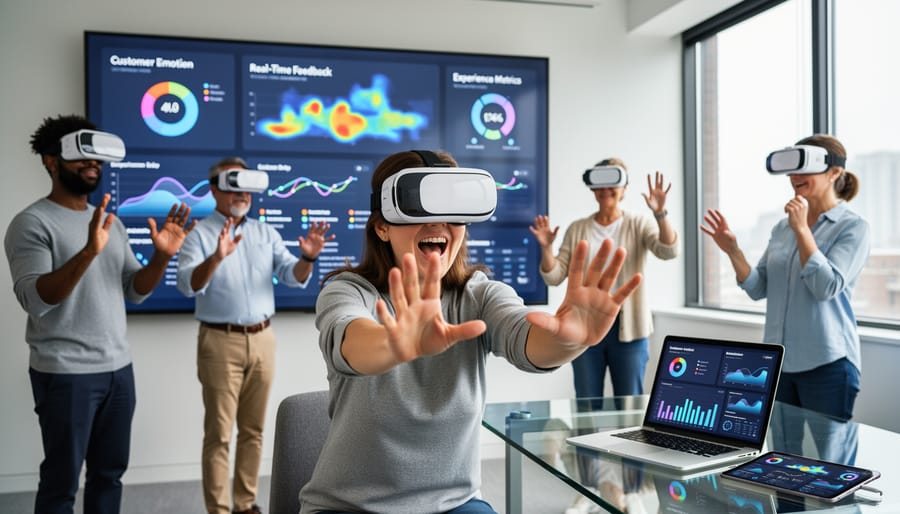
Why Traditional Feedback Methods Fall Short
Traditional feedback methods have served businesses for decades, but they come with significant limitations that can undermine your ability to truly understand your customers. Surveys and feedback forms typically suffer from response rates hovering between 5-15%, meaning you’re only hearing from a small fraction of your customer base. This creates an incomplete picture of customer sentiment and can lead to misguided business decisions.
Response bias presents another critical challenge. Customers who take the time to complete surveys often represent the extremes: either highly satisfied promoters or deeply dissatisfied detractors. The vast middle ground of neutral customers remains silent, yet they represent a significant portion of your revenue. Additionally, survey fatigue has become a real problem as customers face an endless stream of feedback requests from every business they interact with.
The format itself is restrictive. Multiple-choice questions and rating scales force customers into predetermined boxes that may not accurately reflect their true experiences. Open-ended questions yield better insights but require significant time investment from respondents, further reducing completion rates. Even when customers do respond, their feedback is retrospective and filtered through memory, which can distort actual experiences.
Perhaps most importantly, traditional methods fail to capture emotional responses and real-time behavioral data. A customer might rate their satisfaction as seven out of ten, but you have no context about what drove that rating or how they actually behaved during the experience. Did they hesitate before making a purchase? Which features caught their attention? What caused frustration? These crucial insights remain hidden.
This gap between what customers say and what they actually do creates a fundamental problem for businesses trying to optimize their offerings. You need deeper, more authentic data to make informed decisions about product development, marketing strategies, and customer experience improvements. This is precisely where immersive technologies like virtual reality, augmented reality, and extended reality transform the feedback landscape by capturing genuine behavioral responses in controlled yet realistic environments.
Practical Applications of VR/AR for Customer Feedback
Virtual Product Testing and Prototyping
Virtual product testing through VR eliminates the expensive trial-and-error cycle of traditional product development. Instead of manufacturing multiple physical prototypes, businesses can create digital versions that customers interact with in immersive environments, providing feedback before production begins.
This approach works particularly well for furniture retailers, automotive companies, and consumer electronics brands. A furniture manufacturer, for example, can let customers virtually place different couch designs in their living rooms, adjusting colors, fabrics, and configurations in real-time. These interactions generate valuable data about which features resonate most with buyers, informing final production decisions.
The cost savings are substantial. Traditional prototyping requires materials, labor, and shipping expenses for each iteration. VR testing runs multiple design variations simultaneously with minimal additional investment. Companies report reducing product development cycles by 30-40% while gathering more comprehensive feedback than focus groups provide.
Integration with existing workflows is straightforward. Most VR testing platforms connect directly to your CRM and analytics tools, automatically capturing user preferences and engagement metrics. This data feeds into your product development pipeline without manual data entry, similar to how virtual reality shopping experiences streamline the customer journey.
Small businesses can access these capabilities through affordable SaaS platforms starting at a few hundred dollars monthly. The key is starting with a single product line, measuring customer response rates and design preference data, then scaling based on proven ROI before committing to broader implementation.

AR-Enhanced Store and Service Experiences
Augmented reality transforms physical retail and service locations into interactive experiences without requiring specialized equipment. Your customers simply point their smartphones at products, displays, or designated markers to access layered digital information in real time.
This technology enables immediate product comparisons, specification details, and customer reviews while shoppers browse your store. A furniture retailer, for example, can let customers visualize how different fabric options look on a display sofa, or see assembly instructions overlaid on the actual product. Service businesses can use AR markers at different stations to gather instant feedback about wait times, staff interactions, or facility cleanliness.
The real advantage for business owners lies in automated data collection. As customers interact with AR elements, you capture precise information about which products generate interest, how long people engage with specific displays, and where customers encounter confusion or frustration. This feedback loop happens without requiring staff intervention or disrupting the customer experience.
Implementation starts simply. Many AR platforms integrate with existing point-of-sale systems and customer relationship management tools, allowing you to trigger follow-up communications based on in-store AR interactions. A customer who scanned your premium product line receives targeted information about those items via email within hours.
For service businesses, AR-enabled feedback stations provide more honest responses than traditional surveys. Customers give quick ratings by pointing their phones at visual prompts, making the process faster and less intimidating than face-to-face requests.
Immersive Customer Journey Mapping
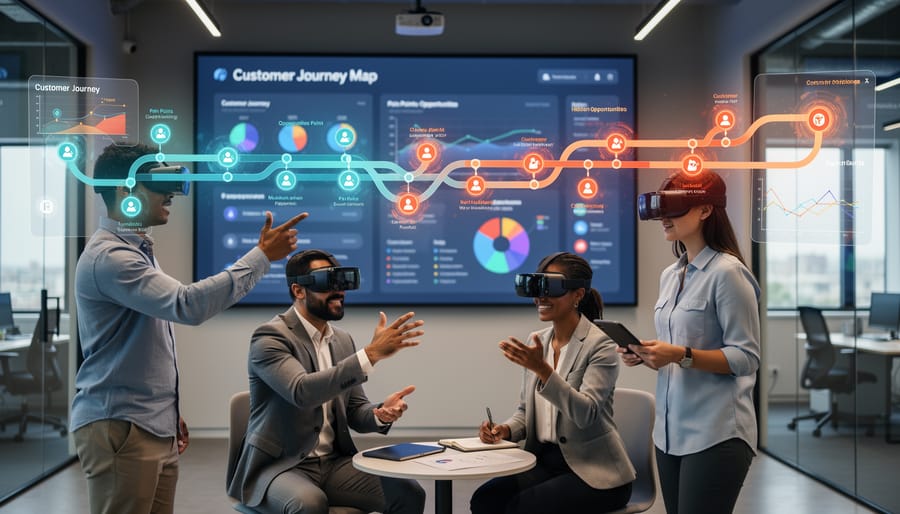
Virtual reality transforms customer journey mapping from a theoretical exercise into an experiential tool that reveals insights traditional surveys and focus groups cannot capture. By recreating your entire customer experience in VR—from first website visit through post-purchase support—your team can literally walk through each touchpoint and observe reactions in real time.
This immersive approach allows you to identify friction points that customers might not articulate in standard feedback forms. When participants navigate a VR simulation of your sales process, their hesitations, facial expressions, and navigation patterns provide data about emotional responses at each decision point. You’ll spot where confusion occurs, which messaging resonates, and where customers abandon the journey.
The practical advantage for small to medium-sized businesses lies in the efficiency. Rather than conducting multiple customer interviews or lengthy observation sessions, you can run automated VR scenarios with diverse user groups simultaneously. The technology tracks metrics like dwell time, eye movement, and interaction patterns, giving you quantifiable data alongside qualitative observations.
Implementation doesn’t require extensive technical resources. Many VR customer journey platforms offer templates you can customize with your brand elements, product information, and specific touchpoints. Start with one critical journey segment—perhaps your checkout process or onboarding sequence—and expand as you see results. The insights gained typically reveal opportunities for improvement that directly impact conversion rates and customer satisfaction, making the investment measurable and justified.
The Business Benefits: Beyond Better Feedback
Implementing VR and AR feedback systems delivers measurable advantages that extend far beyond collecting better customer insights. These technologies create operational efficiencies that directly impact your bottom line while positioning your business as an innovation leader in your market.
The return on investment becomes evident quickly when you examine the numbers. VR and AR feedback collection reduces the time required to gather meaningful customer data by 40-60% compared to traditional methods. This acceleration stems from automated processes that capture responses in real-time as customers interact with virtual environments, eliminating manual data entry and follow-up communications.
| Metric | Traditional Methods | VR/AR Methods |
|---|---|---|
| Engagement Rate | 15-25% | 65-80% |
| Data Quality Score | 6/10 | 8.5/10 |
| Implementation Time | 2-3 weeks | 3-5 days |
| Cost per Response | $12-18 | $4-7 |
These improvements translate into faster product iterations and reduced development costs. When customers interact with AR prototypes or virtual showrooms, they provide specific, actionable feedback that your team can implement immediately without expensive physical mockups or lengthy testing cycles.
Client communication becomes more streamlined through automated reporting features built into most VR and AR platforms. As customers complete their experiences, systems automatically generate detailed analytics and sentiment reports, eliminating hours of manual analysis. Your team receives organized, visual data that supports quick decision-making and enables proactive outreach to address concerns before they escalate.
The competitive positioning advantage cannot be overstated. Businesses deploying these technologies demonstrate forward-thinking approaches that resonate with modern consumers. This perception translates into increased customer loyalty, with studies showing 34% higher retention rates among companies using immersive feedback systems.
For small to medium-sized enterprises, the accessibility of cloud-based VR and AR platforms eliminates traditional barriers to entry. You can launch pilot programs with minimal upfront investment, scale based on results, and integrate feedback data directly into existing customer relationship management systems. This flexibility allows you to test, learn, and optimize without committing to expensive infrastructure or lengthy contracts.
Implementation Roadmap for Small to Medium Businesses
Starting your journey with VR/AR feedback technology doesn’t require enterprise-level budgets. Here’s a practical roadmap designed specifically for SMEs and startups looking to leverage these tools without breaking the bank.
Begin with a pilot project focused on one specific customer touchpoint. Choose a high-impact area like product demonstrations, virtual showrooms, or post-purchase feedback collection. This focused approach allows you to test VR customer feedback solutions while keeping initial investments manageable, typically between $500 to $2,000 for basic setups.
Start with accessible AR applications using smartphones and tablets. Tools like web-based AR viewers require no special hardware from customers and can showcase products in their actual environment. Platforms such as 8th Wall or Zappar offer subscription models starting at $100 monthly, making them ideal entry points for testing customer response.
For VR experiences, consider rental programs or shared workspace solutions before purchasing equipment. Many tech hubs and coworking spaces now offer VR equipment access, allowing you to conduct customer feedback sessions without significant capital expenditure. Alternatively, partner with local VR studios for short-term projects.
Implement a three-month testing phase with clear metrics. Track engagement rates, completion rates, and quality of feedback received compared to traditional methods. Set specific benchmarks like “increase detailed customer feedback by 25%” or “reduce feedback collection time by 40%.”
Automate the feedback collection process from day one. Integrate your VR/AR experiences with existing CRM systems and automated email workflows. This ensures seamless data capture and immediate follow-up communication with customers who participate in immersive feedback sessions.
Scale gradually based on results. If your pilot shows positive ROI, expand to additional customer touchpoints or invest in more sophisticated equipment. Many successful SMEs start with simple 360-degree product videos before advancing to fully interactive VR environments.
Leverage freelance developers and off-the-shelf platforms rather than building custom solutions initially. Platforms like CoSpaces and Blippar offer templates and drag-and-drop interfaces that reduce development costs significantly.
Finally, prioritize training for your team. Allocate 20% of your initial budget to staff training on equipment operation and customer interaction protocols. Well-trained staff maximize the value of your technology investment and ensure consistent, professional customer experiences.
Automating VR/AR Feedback Collection and Analysis
Collecting feedback from VR and AR experiences doesn’t need to drain your team’s time or resources. Modern automated systems can handle the heavy lifting of data collection and initial analysis, allowing your staff to focus on meaningful client conversations and strategic decisions.
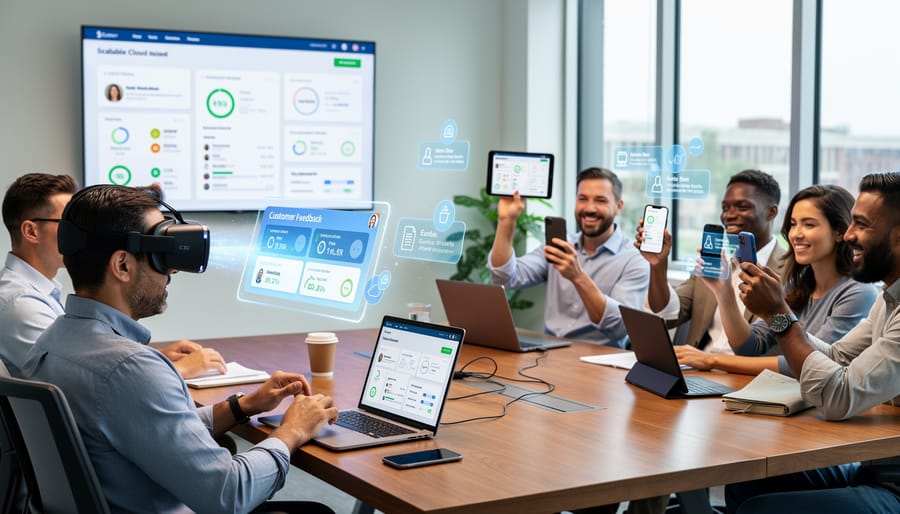
Start by embedding automated feedback triggers directly into your immersive experiences. When users complete key actions—finishing a virtual product demo, reaching a decision point in an AR catalog, or spending significant time on specific features—the system can automatically prompt for input. These micro-feedback moments capture authentic reactions without interrupting the experience or requiring manual follow-up from your team.
Backend automation takes care of organizing and processing this data stream. Analytics platforms can automatically categorize responses, identify patterns in user behavior, and flag notable trends. For example, if multiple users abandon a virtual showroom at the same point, automated alerts notify your team immediately rather than waiting for monthly report reviews.
The real power emerges when analyzing immersive feedback data connects directly to your customer relationship management system. Automated workflows can segment users based on their interactions, trigger personalized follow-up sequences, and even schedule sales calls when prospects demonstrate high engagement signals.
This approach eliminates tedious manual data entry and report generation. Your marketing and sales teams receive clean, actionable insights without spending hours compiling spreadsheets. They can dedicate their energy to what automation cannot replicate—building relationships, addressing specific client concerns, and crafting tailored solutions based on the insights technology surfaces.
For small and medium-sized businesses, this automation levels the playing field. You gain enterprise-level data processing capabilities without enterprise-level staffing costs. The system works continuously in the background, ensuring no valuable feedback slips through the cracks while your team maintains the human touch that drives actual conversions.
Common Challenges and How to Overcome Them
While XR technologies offer transformative potential for customer engagement, businesses commonly face four primary obstacles that can derail implementation efforts. Understanding these challenges upfront and preparing practical solutions will significantly improve your chances of success.
Cost concerns top the list for most SMEs. Initial investments in hardware, software licenses, and content creation can range from $5,000 to $50,000 depending on complexity. To manage this, start with a pilot program focused on one specific use case rather than a full-scale rollout. Many platforms now offer monthly subscription models that eliminate large upfront costs. Consider partnering with XR development agencies that offer phased payment structures, allowing you to spread expenses across quarters while demonstrating value to stakeholders.
The technical expertise gap presents another significant hurdle. Your team may lack the specialized skills needed to create and maintain XR experiences. Address this by leveraging no-code or low-code platforms that simplify content creation through drag-and-drop interfaces. Invest in targeted training for one or two team members rather than hiring full-time specialists initially. Alternatively, outsource technical development while keeping strategy and customer insights in-house, where your team already excels.
- Captures detailed emotional and behavioral feedback impossible with traditional surveys
- Significantly increases engagement rates compared to standard feedback forms
- Provides immersive product testing environments that reduce costly physical prototypes
- Generates rich data visualization for quick decision-making
- Requires customer access to compatible devices and reliable internet connections
- Initial development costs can strain limited marketing budgets
- Learning curve may temporarily reduce participation rates
- Technology updates and maintenance demand ongoing resource allocation
Customer adoption resistance often stems from unfamiliarity or perceived complexity. Combat this by offering multiple feedback channels, positioning XR as an optional premium experience rather than the only avenue. Create simple onboarding tutorials and provide technical support during initial rollout phases. Incentivize participation with exclusive offers or early access to products for customers who engage through XR platforms.
Data privacy and security concerns require transparent communication and robust protocols. Clearly explain what data you collect, how it’s stored, and who has access. Implement encryption standards and comply with regulations like GDPR and CCPA. Display privacy certifications prominently and allow customers to opt out at any time. Building trust through transparency will convert skeptics into willing participants.
Measuring Success: KPIs That Matter
Implementing VR and AR feedback solutions requires clear success metrics to justify your investment and guide optimization. Start by tracking engagement rates—specifically, how many customers actually use your VR or AR experience compared to those who receive the invitation. Industry benchmarks suggest participation rates between 15-30% for novel experiences, significantly higher than traditional survey methods.
Monitor completion rates to understand if your experience holds attention. If customers abandon the experience midway, you’ve identified a friction point that needs addressing. Track the average time spent in each experience segment to pinpoint which elements generate the most valuable insights.
Measure the quality and quantity of feedback collected. Count the number of actionable insights generated per session—comments, ratings, and behavioral data points that inform business decisions. Compare this against your traditional feedback channels to assess relative value.
Customer satisfaction scores provide direct impact measurement. Track Net Promoter Score (NPS) changes among customers who participated in VR/AR feedback versus those who didn’t. Many businesses report 20-40% higher satisfaction scores when customers feel heard through immersive experiences.
Calculate your feedback-to-action ratio by monitoring how many insights actually drive business changes. This metric validates whether you’re collecting meaningful data or just generating noise.
Return on investment requires tracking implementation costs against tangible outcomes. Measure conversion rate improvements, reduced product return rates, or increased customer lifetime value attributable to insights gained through VR/AR feedback.
Set up automated reporting dashboards that compile these metrics weekly. This streamlines performance monitoring and helps you communicate results to stakeholders without manual data compilation. Remember, the goal isn’t just collecting metrics—it’s using them to continuously refine your approach and demonstrate clear business value.
The landscape of customer feedback is shifting rapidly, and VR, AR, and XR technologies are no longer exclusive to enterprise-level corporations with massive budgets. These immersive tools have become increasingly accessible, with scalable solutions designed specifically for small to medium-sized businesses. The barriers to entry—once formidable costs and technical complexity—have diminished considerably, making now the ideal time to explore how these technologies can transform your customer engagement strategy.
Starting doesn’t require a complete overhaul of your existing processes. Begin with a focused pilot program targeting a specific customer segment or product line. Test a simple AR feature that allows customers to visualize products in their environment, or create a VR experience for a flagship offering. These small-scale implementations provide valuable insights without overwhelming your resources or budget.
The competitive advantage belongs to early adopters. Companies that integrate immersive feedback tools today gain deeper customer understanding, collect richer behavioral data, and establish themselves as innovative leaders in their industries. Your competitors are evaluating these same technologies—waiting too long means catching up rather than leading.
The most successful implementations focus on solving specific customer pain points rather than adopting technology for its own sake. Identify where visualization, spatial understanding, or immersive experience genuinely improves your customer’s decision-making process. When automated processes for data collection meet immersive engagement tools, you create a powerful system for continuous improvement.
Take the first step today. Your customers are ready for more engaging experiences, and the tools to deliver them are within reach.
Leave a Reply