AI Lead Generation That Actually Works (Real Business Results)

Transform your lead generation strategy with AI-powered tools that consistently deliver 2-3x more qualified prospects than traditional methods. Modern artificial intelligence algorithms now analyze vast datasets of customer behavior, engagement patterns, and market signals to identify and prioritize high-value leads with unprecedented accuracy.
Industry leaders leveraging AI for lead generation report a 50% reduction in customer acquisition costs while experiencing a 30% increase in conversion rates. From predictive analytics that score leads in real-time to intelligent chatbots that qualify prospects 24/7, AI technologies are revolutionizing how businesses identify, engage, and convert potential customers.
By implementing AI-driven lead generation systems, companies can automate repetitive prospecting tasks, personalize outreach at scale, and focus human resources on high-impact activities that directly drive revenue. This strategic shift from manual to AI-assisted lead generation isn’t just about efficiency—it’s about gaining a competitive edge in an increasingly digital marketplace where speed and precision in lead qualification make the difference between winning and losing deals.
Stay ahead of the curve by exploring how AI can supercharge your lead generation efforts while delivering measurable ROI through increased conversion rates, reduced costs, and accelerated sales cycles.
How AI is Revolutionizing Lead Generation Today
Predictive Analytics for Lead Scoring
Predictive analytics revolutionizes lead scoring by leveraging AI algorithms to analyze vast amounts of historical and real-time data. These sophisticated systems examine multiple data points, including website behavior, email interactions, social media engagement, and purchase history, to identify patterns that indicate high-quality leads.
AI-powered lead scoring assigns numerical values to potential customers based on their likelihood to convert. The system continuously learns from successful conversions and failed attempts, refining its scoring criteria over time. This dynamic approach ensures that your sales team focuses their efforts on the most promising prospects.
Key indicators that AI systems analyze include:
– Time spent on specific product pages
– Download patterns of marketing materials
– Frequency of website visits
– Social media interactions
– Email response rates
– Company size and industry data
The beauty of AI-driven lead scoring lies in its ability to process these multiple variables simultaneously and identify correlations that humans might miss. By automatically prioritizing leads based on their potential value, businesses can significantly improve their conversion rates while reducing time spent on unqualified prospects.
For optimal results, companies should regularly update their AI models with fresh data and adjust scoring parameters based on changing market conditions and business objectives.

Automated Lead Qualification
Modern AI-powered lead qualification systems revolutionize how businesses identify and prioritize potential customers. These intelligent systems analyze multiple data points simultaneously, including website behavior, engagement patterns, social media activity, and historical purchase data to automatically score and categorize leads.
By leveraging machine learning algorithms, these systems can detect subtle patterns that human analysts might miss. For example, they can identify when a prospect’s browsing behavior indicates high purchase intent or when their social media engagement suggests they’re actively researching solutions in your industry.
The qualification process becomes more refined over time as the AI learns from successful conversions and failed attempts. Key indicators such as company size, budget allocation, decision-maker position, and industry vertical are weighted automatically based on your business’s specific success patterns.
This automated approach not only saves valuable time but also significantly reduces human bias in lead scoring. Companies typically report a 30-50% increase in conversion rates when implementing AI-powered lead qualification systems, primarily due to more accurate prioritization of high-potential leads and better allocation of sales resources.
Implementing AI Tools for Better Lead Generation

Chatbots and Conversational AI
AI-powered chatbots have revolutionized lead generation by providing 24/7 engagement capabilities while significantly reducing operational costs. These intelligent conversational agents are transforming how businesses capture and qualify leads, making them an essential tool for modern marketing strategies and chatbots for business growth.
To effectively implement chatbots for lead generation, start by programming them to ask qualifying questions that help identify high-potential leads. Configure your chatbot to collect essential information such as company size, budget range, and specific pain points. This automated qualification process ensures that only the most promising leads are passed to your sales team.
Key features to incorporate in your lead generation chatbot:
– Custom welcome messages based on user behavior
– Dynamic conversation flows that adapt to user responses
– Lead scoring capabilities
– Seamless CRM integration
– Automated follow-up scheduling
– Data collection and analytics tracking
Remember to maintain a conversational tone in your chatbot’s responses while keeping the interaction professional and focused. Program your bot to recognize when a conversation requires human intervention and ensure smooth handoffs to live agents when necessary.
For optimal results, regularly analyze chatbot performance metrics such as conversation completion rates, lead quality scores, and conversion rates. Use these insights to refine your bot’s conversation flows and qualifying criteria. Consider implementing A/B testing to optimize your chatbot’s effectiveness in converting visitors into qualified leads.
By properly configuring your AI chatbot, you can create a powerful lead generation tool that not only captures leads but also nurtures them through the initial stages of your sales funnel.
AI-Powered Content Personalization
AI-powered content personalization represents a significant leap forward in lead generation effectiveness. By leveraging machine learning algorithms, businesses can now deliver highly targeted content that resonates with specific audience segments. Implementing effective content personalization strategies can increase engagement rates by up to 300% and conversion rates by 20%.
The process begins with AI analyzing vast amounts of user data, including browsing behavior, interaction patterns, and demographic information. This analysis enables the creation of detailed customer profiles and personas, which inform content customization across various touchpoints. For example, AI can automatically adjust website content, email messaging, and social media posts based on individual user preferences and behaviors.
Key benefits of AI-powered content personalization include:
• Real-time content adaptation based on user behavior
• Dynamic product recommendations
• Personalized email campaigns with optimal send times
• Customized landing pages that match visitor intent
• Automated A/B testing for content optimization
To implement AI personalization effectively, start by:
1. Collecting quality data from multiple touchpoints
2. Setting clear personalization goals and KPIs
3. Choosing the right AI tools for your business needs
4. Testing and refining your personalization algorithms
Remember to maintain transparency with your audience about data collection and use, and ensure your personalization efforts add genuine value to the user experience. Start with small-scale implementations and gradually expand based on performance metrics and user feedback. This approach helps build trust while maximizing the effectiveness of your lead generation efforts.
Measuring and Optimizing AI Lead Generation
Key Performance Metrics
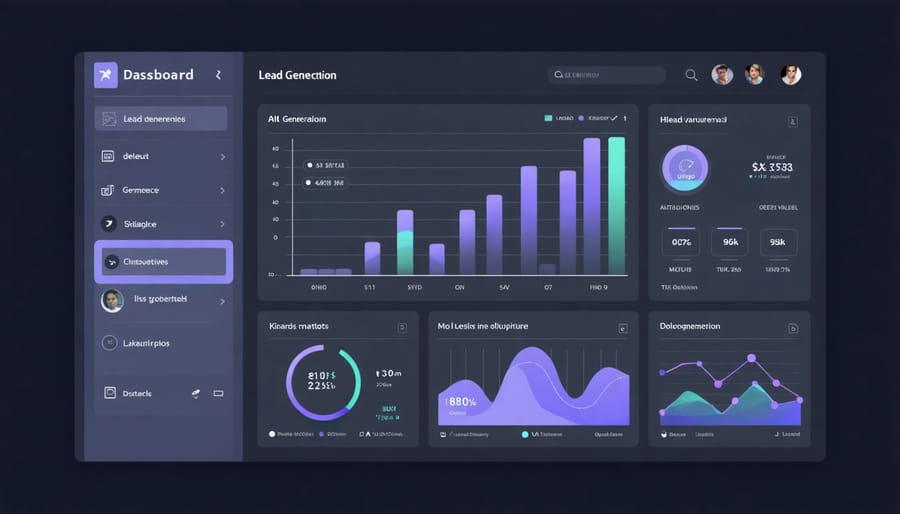
To effectively measure the success of your AI-powered lead generation efforts, monitoring key performance metrics is crucial. Start by focusing on lead quality scores, which AI systems can calculate based on prospect engagement, demographic fit, and behavioral patterns. Track your conversion rates at different stages of the funnel, comparing pre and post-AI implementation results to demonstrate ROI.
Essential metrics include the lead response time, which should significantly decrease with AI automation, and lead qualification accuracy, showing how well your AI system identifies promising prospects. Monitor the cost per qualified lead and compare it against traditional methods for tracking marketing ROI.
Pay attention to engagement metrics such as email open rates, click-through rates, and website interaction patterns that your AI system identifies. These indicators help refine your targeting and messaging strategies. Also track lead velocity rate (LVR), measuring the growth in qualified leads month over month.
Customer acquisition cost (CAC) should decrease as AI optimizes your targeting, while lead-to-opportunity ratio helps verify the quality of AI-generated leads. Monitor the predictive accuracy of your AI models by comparing forecasted versus actual conversion rates, and regularly assess the percentage of leads that match your ideal customer profile (ICP).
Remember to analyze these metrics consistently and use the insights to fine-tune your AI algorithms and lead generation strategies for continuous improvement.
Continuous Improvement Strategies
To maximize the effectiveness of your AI-driven lead generation system, implementing a continuous improvement strategy is essential. Start by establishing clear metrics for success, including conversion rates, lead quality scores, and response times. Monitor these KPIs regularly and use the data to identify patterns and areas for optimization.
Implement A/B testing for different AI approaches, such as varying message templates, timing sequences, and targeting parameters. This systematic testing helps identify which strategies yield the best results for your specific audience and industry.
Regular data cleaning and system maintenance are crucial. Ensure your AI tools are working with accurate, up-to-date information by periodically reviewing and updating your data sources, removing duplicate entries, and validating contact information.
Consider creating feedback loops between your sales team and AI system. Sales representatives can provide valuable insights about lead quality and engagement patterns, which can be used to refine your AI algorithms and targeting criteria.
Don’t forget to stay current with AI technology advancements. Regularly evaluate new tools and features that could enhance your lead generation process. Consider integrating complementary AI technologies, such as predictive analytics or natural language processing, to improve lead scoring and qualification.
Finally, document all improvements and their impacts. This creates a knowledge base for future optimization efforts and helps justify continued investment in AI-driven lead generation strategies.
Implementing AI for lead generation represents a significant step forward in modernizing your business development strategy. By leveraging AI tools, you can automate repetitive tasks, identify high-quality leads more accurately, and personalize your outreach efforts at scale. The key to success lies in starting small, measuring results, and gradually expanding your AI implementation based on proven outcomes.
Begin by identifying one or two areas where AI can make the most immediate impact on your lead generation process. This might be automating initial contact emails or using predictive analytics to score leads. Set clear metrics for success and establish a baseline for comparison before implementation.
Remember that AI is not a replacement for human interaction but rather a tool to enhance it. Use the time saved through automation to focus on building meaningful relationships with qualified leads and refining your overall strategy. Regular monitoring and adjustment of your AI systems ensure they continue to deliver optimal results.
Take action now by:
1. Auditing your current lead generation process
2. Selecting appropriate AI tools based on your specific needs
3. Training your team on new AI implementations
4. Establishing clear KPIs to measure success
5. Creating a feedback loop for continuous improvement
As AI technology continues to evolve, staying informed about new developments and best practices will help you maintain a competitive edge in lead generation. Start implementing these strategies today to transform your lead generation process and drive better business results tomorrow.
Leave a Reply