How IoT Sensor Data Reveals What Your Customers Want Before They Know It

Monitor customer behavior through connected devices to spot purchasing patterns before traditional surveys reveal them. IoT sensors embedded in retail spaces, products, and digital touchpoints capture real-time data about how consumers interact with your offerings—from which displays generate the most foot traffic to when products leave shelves fastest.
Transform this sensor data into market intelligence by tracking three key metrics: usage frequency, environmental conditions during peak engagement, and customer journey touchpoints. A coffee shop chain using temperature and occupancy sensors discovered their afternoon slump coincided with uncomfortable store temperatures, not declining product appeal. They adjusted climate controls and saw a 23% revenue increase during previously slow hours.
Combine sensor insights with predictive analytics to anticipate market shifts weeks ahead of competitors. When machine learning predicts customer needs using sensor data patterns, you can adjust inventory, pricing, and marketing campaigns proactively rather than reactively.
Implement automated alert systems that notify your team when sensor data indicates emerging trends. Set thresholds for significant behavioral changes—like a 15% increase in after-hours website traffic from mobile devices or unusual product interaction patterns in specific store sections. These triggers let you test new offerings or adjust strategies while opportunities are fresh, turning raw sensor data into competitive advantages that drive measurable business growth.
What IoT Sensor Data Actually Tells You About Market Behavior
Real-Time Consumer Movement Patterns
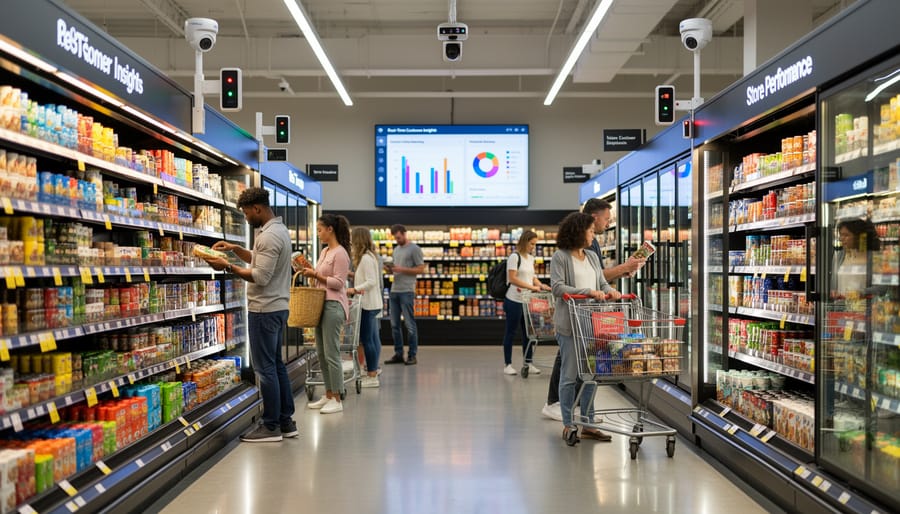
Foot traffic sensors and location-based technology provide unprecedented visibility into how customers interact with physical retail spaces. These sensors track movement patterns throughout stores, measuring which areas attract attention and which remain overlooked. Business owners gain concrete data on peak traffic times, popular pathways, and zones where customers naturally congregate.
Modern sensor systems measure dwell time—how long shoppers linger near specific displays or product categories. Extended dwell times typically indicate genuine interest, helping you identify high-performing merchandise and optimal product placement. This data directly connects to behavioral patterns and purchase decisions, revealing what truly captures customer attention versus what gets ignored.
Heat mapping technology visualizes customer concentration areas, showing exactly where people spend their time. This information proves invaluable for strategic decisions about store layout, promotional displays, and staffing allocation. You can automate alerts when unusual traffic patterns emerge, enabling rapid response to changing customer behaviors.
The automated collection and analysis of movement data eliminates guesswork from retail strategy. Instead of assumptions, you work with verified patterns that highlight opportunities for improved customer engagement and increased sales conversion rates.
Environmental Data That Drives Purchase Decisions
Environmental conditions significantly influence consumer behavior, and smart sensors capture these patterns in real-time. Temperature sensors in retail locations reveal that shoppers tend to purchase different products when indoor conditions vary—coffee sales spike when thermostats drop below 68°F, while cold beverages increase above 74°F.
Weather sensors provide even broader insights. Grocery chains use precipitation data to automatically adjust inventory, stocking more comfort foods and indoor entertainment options before storms. Fashion retailers correlate temperature trends with clothing purchases, predicting demand shifts weeks in advance. This allows automated reordering systems to adjust stock levels without manual intervention.
Humidity sensors prove valuable for health and beauty brands, as customers purchase more moisturizers and skincare products during dry conditions. Hardware stores track barometric pressure changes to anticipate demand for emergency supplies and home repair items.
The key advantage lies in automation. By connecting environmental sensors directly to your inventory and marketing systems, you can trigger promotional campaigns and adjust pricing based on current conditions. A lawn care company might automatically send targeted emails about drought-resistant products when local moisture sensors detect dry spells, ensuring messages reach customers exactly when they’re most relevant.
Why Traditional Market Research Falls Short (And How Sensors Fill the Gap)
Traditional research methods like surveys and focus groups have served businesses well for decades, but they come with significant limitations that can skew your understanding of actual market behavior.
The core problem? People don’t always do what they say they’ll do. Survey respondents might claim they prefer eco-friendly products, yet their purchase history tells a different story. Focus groups can be influenced by dominant personalities or social desirability bias, where participants adjust their responses to appear more favorable. You’re essentially collecting opinions rather than observing actual behavior.
Sensor-driven data collection eliminates these human biases entirely. Instead of asking customers how long they spend browsing a product category, sensors measure it precisely. Rather than inquiring about shopping patterns, foot traffic sensors reveal the exact routes customers take through your store. This shift from self-reported data to observed behavior provides a foundation of truth you can actually trust.
The continuous nature of sensor data offers another critical advantage. Traditional research captures snapshots in time, requiring you to constantly commission new studies to stay current. Sensors operate around the clock, automatically feeding fresh insights into your systems without manual intervention. This means you can spot emerging trends as they happen, not months after they’ve already shifted your market.
Cost efficiency matters too. While initial sensor deployment requires investment, the ongoing data collection happens automatically. Compare this to repeatedly hiring research firms or dedicating staff time to surveys, and the long-term value becomes clear. You’re building an always-on intelligence system that grows more valuable as it accumulates historical data for comparison and pattern recognition.
Practical Applications: Where Sensor Data Makes the Biggest Impact
Retail: Understanding In-Store Customer Journeys
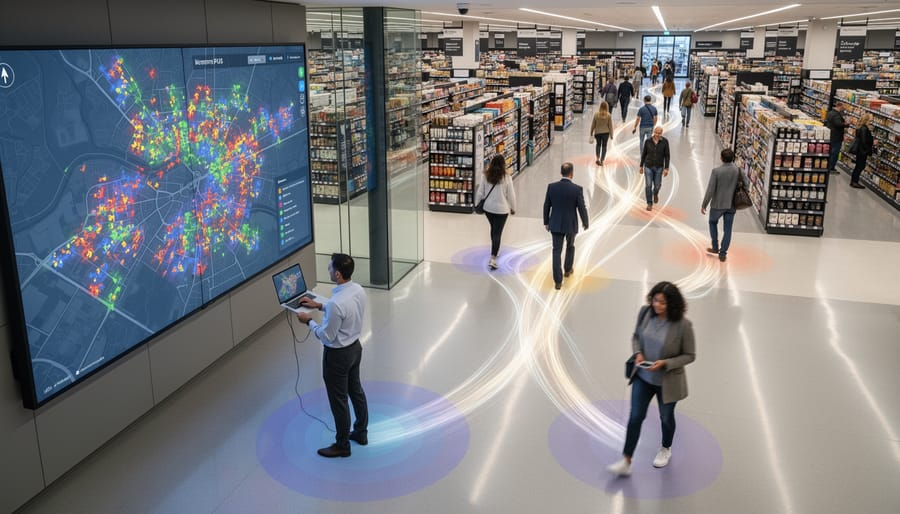
Brick-and-mortar retailers are transforming physical stores into data-rich environments using sensor technology to understand customer behavior. Heat mapping sensors track foot traffic patterns, revealing which aisles attract attention and which products customers examine most frequently. This automated data collection eliminates guesswork from merchandising decisions.
Smart shelves equipped with weight and proximity sensors identify when customers pick up products and how long they consider purchases before deciding. Retailers use these insights to optimize product placement at eye level for high-margin items and adjust promotional displays based on actual engagement rates rather than assumptions.
Beacon technology and WiFi sensors provide timeline data showing peak shopping hours and average dwell times in specific departments. Store managers can schedule staff accordingly and time promotional announcements when foot traffic is highest, maximizing impact without additional marketing spend.
Temperature and lighting sensors also contribute valuable context, correlating environmental conditions with purchasing behavior. Some retailers have discovered that slight temperature adjustments in certain departments increase browsing time and sales.
The key advantage is continuous, passive data collection that requires no customer surveys or manual observation. This automated approach provides real-time insights for immediate store layout adjustments and informs longer-term merchandising strategies.
Product Development: Testing Before Launch
Smart devices generate continuous streams of usage data that reveal exactly how customers interact with your products before full market release. This real-world testing environment provides insights no focus group can match.
Motion sensors in prototype smart home devices show which features users activate most frequently and which remain untouched. Temperature and pressure sensors in fitness wearables indicate when and how intensely people exercise, informing which metrics to prioritize in your final design. This automated data collection eliminates guesswork and reduces costly post-launch modifications.
Set up automated monitoring systems during beta testing phases to track sensor patterns across different user segments. Accelerometer data from smart appliances, for example, might reveal that users struggle with certain controls, prompting interface redesigns before manufacturing begins. Location sensors demonstrate where and when products get used most, guiding marketing messages and feature positioning.
The key advantage lies in continuous feedback loops. Rather than waiting for quarterly surveys, sensor data flows automatically to your development team, enabling rapid iterations based on actual behavior patterns. This approach shortens development cycles and ensures you launch products that align with proven customer needs rather than assumptions.
Marketing Campaign Optimization
Sensor data transforms marketing campaigns from guesswork into precision-timed initiatives. When retail sensors detect foot traffic patterns, businesses can schedule promotional emails or social media posts to coincide with peak shopping hours. This synchronization maximizes campaign visibility and response rates without manual monitoring.
Location sensors enable businesses to personalize messaging based on customer proximity and behavior. A coffee shop can automatically send discount offers when sensors detect regular customers nearby, while retailers adjust in-store displays based on dwell time data collected from shopper movements.
The real advantage lies in measuring offline engagement that traditional analytics miss. Temperature sensors in product displays, pressure sensors on brochure racks, and motion detectors at promotional stands provide concrete evidence of campaign effectiveness. This data reveals which materials customers actually interact with, allowing you to refine messaging and allocate budgets to proven tactics.
Automated sensor systems continuously feed this information into your marketing platforms, eliminating the delay between campaign launch and performance assessment. You gain immediate insights into what resonates with your audience, enabling rapid adjustments that improve ROI across all channels.
Automating Sensor Data Collection for Your Marketing Strategy
Choosing the Right Sensors for Your Business Goals
Selecting the right sensors starts with clarifying what you need to learn about your customers. Retail businesses tracking foot traffic patterns benefit from motion sensors and heat mapping technology, while restaurants might prioritize temperature and humidity sensors to maintain food quality and monitor peak dining times. Your customer base matters too—B2C companies often need broader behavioral data from location sensors, whereas B2C enterprises may focus on specific interaction points using pressure sensors or RFID technology.
Align sensor choices with your marketing objectives. If you’re measuring campaign effectiveness, beacon technology can track how promotional displays influence in-store behavior. For inventory optimization, weight sensors and shelf-monitoring systems provide real-time stock data that informs purchasing decisions and prevents lost sales.
Consider implementation practicality. Start with sensors that integrate easily into your existing systems and offer automated data collection without requiring constant manual oversight. Cloud-connected sensors enable seamless data flow to your analytics platforms, reducing the workload on your team while improving client communication through timely, data-backed insights.
Budget constraints shouldn’t derail your efforts. Begin with one or two sensor types addressing your most pressing business questions, then expand as you demonstrate ROI and refine your data strategy.
Integration with Your Existing Marketing Tools
The good news is that connecting sensor data to your existing marketing infrastructure doesn’t require a complete system overhaul. Most modern platforms offer API integrations or middleware solutions that bridge the gap between IoT devices and your business tools.
Start by identifying which marketing tools will benefit most from sensor data. Your CRM system can automatically update customer profiles based on real-world behavior captured by sensors. For example, foot traffic data from retail stores can trigger personalized follow-up campaigns or adjust lead scoring in your system. Marketing automation platforms can use sensor triggers to send timely communications when specific conditions are met, such as inventory levels dropping or customer dwell time increasing in certain areas.
Analytics platforms like Google Analytics or specialized business intelligence tools can ingest sensor data through webhook connections or cloud-based data warehouses. This integration allows you to correlate sensor insights with your digital marketing metrics, creating a complete picture of customer behavior across all touchpoints.
For seamless integration, consider using platforms like Zapier or Make (formerly Integromat) as middleware solutions. These tools require minimal technical expertise and can connect sensor data streams to hundreds of marketing applications without custom coding. Alternatively, cloud platforms such as AWS IoT or Microsoft Azure IoT Hub offer robust integration capabilities for businesses handling larger data volumes.
The key is starting small. Connect one sensor data stream to one marketing tool, test the workflow, then scale gradually as you validate results and identify additional opportunities for automation.
Making Sense of the Data: From Numbers to Marketing Decisions
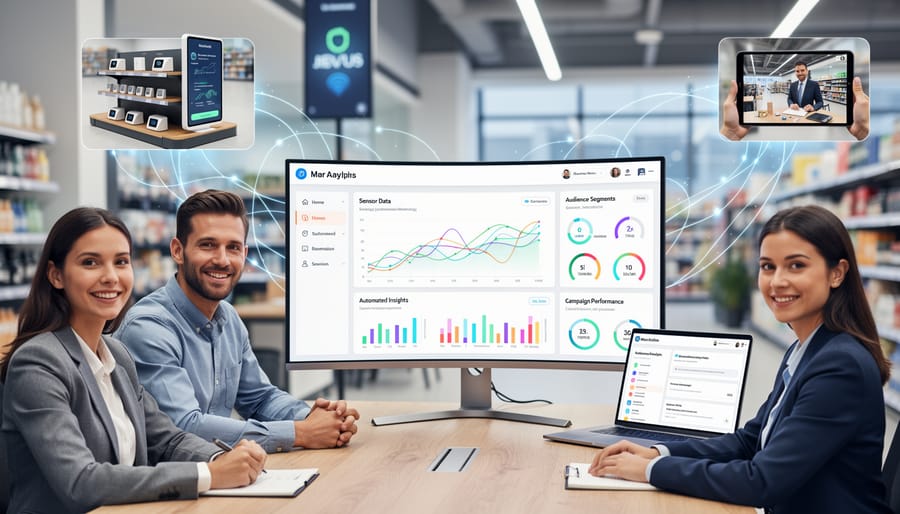
Transforming sensor data into marketing decisions doesn’t require a dedicated data science team. Start by establishing clear metrics that align with your business goals. If you’re tracking foot traffic, focus on peak hours, dwell time, and conversion rates. For temperature sensors in retail, monitor correlations between environmental conditions and purchase behavior.
Begin with simple visualization tools like spreadsheets or basic dashboard software. Plot your sensor data over time to identify patterns. Look for daily cycles, weekly trends, and seasonal variations. These patterns reveal when customers are most active, which products generate interest, and how external factors influence behavior.
Compare sensor data against your sales records to find meaningful correlations. If footfall increases but sales don’t, you might have a conversion problem. If temperature changes coincide with specific product movements, you’ve identified an environmental trigger. These insights directly inform inventory decisions, staffing schedules, and promotional timing.
Set up automated alerts for significant deviations from normal patterns. When foot traffic drops 20 percent below average or dwell time in a key area increases substantially, your system should notify you immediately. This automation ensures you catch opportunities and address issues without constantly monitoring dashboards.
Create weekly reports that summarize three key metrics: trend direction, anomalies detected, and recommended actions. Keep these reports concise and action-oriented. Rather than presenting raw numbers, translate them into business implications. Instead of “Temperature averaged 72 degrees,” say “Optimal temperature maintained resulted in 15 percent longer browsing time.”
Test hypotheses systematically. If sensor data suggests customers avoid certain store areas during peak hours, experiment with layout changes or promotional displays. Measure results and refine your approach based on what the data reveals. This iterative process turns sensor insights into proven marketing strategies that drive measurable results.
Privacy and Transparency: Building Customer Trust While Collecting Data
When collecting sensor data from customers, transparency isn’t just good ethics—it’s essential for building lasting business relationships. Clear communication about what data you collect, how you use it, and who benefits creates trust that directly impacts your bottom line.
Start by implementing a straightforward consent process. Before activating sensors in retail spaces or connected products, inform customers exactly what data you’re gathering. Smart fitting rooms tracking garment selections? Tell shoppers upfront. Temperature sensors monitoring product preferences? Make it visible. This proactive approach prevents the uncomfortable feeling of surveillance and positions data collection as a mutual benefit.
Compliance with regulations like GDPR, CCPA, and industry-specific requirements isn’t optional. Automated compliance tools can help you maintain proper documentation, manage consent preferences, and handle data deletion requests efficiently. These systems reduce manual oversight while ensuring you meet legal obligations across different jurisdictions.
Strengthen customer relationships by demonstrating value exchange. Show how sensor data improves their experience—whether through personalized recommendations, optimized store layouts, or better product availability. When customers see tangible benefits, they’re more willing to participate in data collection.
Establish robust data security and privacy protocols from day one. Anonymize personal identifiers whenever possible, encrypt data transmission, and limit access to essential personnel only. Regular security audits should be automated to catch vulnerabilities before they become problems.
Create a simple, accessible privacy dashboard where customers can review what data you’ve collected, adjust their preferences, or opt out entirely. This transparency tool demonstrates respect for customer autonomy and often reduces privacy concerns more effectively than lengthy legal documents.
Remember: customers who trust your data practices become advocates for your brand, willingly sharing information that helps you serve them better.
IoT sensor data has fundamentally changed the landscape of market research, replacing educated guesses with concrete, real-time insights. The numbers don’t lie: when you know exactly how customers interact with products, when demand peaks occur, and which environmental factors influence purchasing decisions, you’re no longer operating on assumptions. You’re making informed decisions backed by continuous data streams that update faster than traditional research methods ever could.
The transformation from guesswork to precision doesn’t require a complete business overhaul. Start small by identifying one area where better data would immediately impact your bottom line. Perhaps it’s understanding foot traffic patterns in your retail space, monitoring product usage in the field, or tracking supply chain conditions that affect customer satisfaction. Choose a specific problem, implement sensors to gather relevant data, and automate the reporting process so insights flow directly to decision-makers without manual intervention.
Remember that technology serves your business goals, not the other way around. While sensor data provides the intelligence you need, maintaining strong client communication remains paramount. Use these insights to enhance conversations with customers, showing them you understand their needs based on actual behavior patterns. Automate the data collection and analysis, but keep the human touch where it matters most: in building relationships and delivering personalized experiences.
The competitive advantage belongs to businesses that act now. Your competitors are either already leveraging this technology or planning to. The question isn’t whether to adopt IoT sensor data in your market research strategy, but how quickly you can implement it effectively.
Leave a Reply